In outdoor industrial control, photovoltaic supporting, outdoor instrument wiring and other scenarios, cable aging and failure caused by ultraviolet radiation is a high-frequency engineering problem in the industry. Many people may have questions during the selection stage: What is the stability of UL20710 multi core copper wire under ultraviolet radiation environment? Does it have weather resistance for long-term outdoor service?
This article objectively summarizes the material characteristics, weather resistance testing basis, and actual working condition adaptation boundaries of UL20710, restoring its true performance in UV resistance and providing rational reference for wiring selection.
Where is the damage caused by ultraviolet radiation to electrical wires hidden?
Don't think that ultraviolet radiation is mystical, its damage to wires is particularly direct. In the sunlight we come into daily contact with, the UVA and UVB bands directly penetrate the outer layer of ordinary plastics, slowly breaking the molecular chains of polymer materials. Over time, the outer skin of ordinary PVC and nylon wires will pulverize, crack, become hard and brittle, and the originally soft wires will shatter at a touch, leading to a sharp decline in insulation performance and potential safety hazards.
To put it simply, the resistance of wires to ultraviolet radiation depends on the insulation and sheath materials. Copper cores themselves are not afraid of ultraviolet radiation erosion, and the outer protective layer is the one that truly bears the damage. This is also the key to judging the performance of UL20710. Let's just peel off its "outer layer" and see its essence.
Core material of UL20710: FEP
UL20710 multi-core copper wire, equipped with FEP insulation layer as standard, belongs to the high-performance material of the Teflon family, which is also its core advantage compared to ordinary wire. Many people only know that it can withstand high temperatures (up to 200℃ for a long time), but overlook its innate weather resistance properties.
The molecular structure of fluoroplastics is particularly stable, with strong carbon fluorine bonds that cannot be broken by ultraviolet radiation. Unlike ordinary plastics that degrade upon exposure to sunlight, FEP material does not change color or powder or lose flexibility when exposed to long-term ultraviolet radiation. Its mechanical and insulation properties can be maintained at over 90%.
I have seen many outdoor monitoring and photovoltaic wiring scenarios, where UL20710 wires are laid outdoors for more than half a year, and the outer layer is still smooth and flexible, without any signs of aging or cracking like ordinary wires; Compared to conventional fluoroplastic wires laid during the same period, the color difference and brittleness problems are almost zero, which is the inherent UV resistance of the material.
UL20710 is not a universal sunscreen wire, some details need to be noted
Don't misunderstand, saying that it is UV resistant doesn't mean it can be exposed to unlimited sun abuse. As an industrial grade multi-core wire, its design positioning is for short-term outdoor exposure and semi outdoor environment, rather than long-term all-weather exposure, which must be distinguished.
In extreme environments such as strong sunshine in the south, high salt fog in the coast, and exposure to the desert, even if UL20710 is anti-aging, it is recommended to use trunking, corrugated pipe or sunscreen sleeve for secondary protection. On the one hand, it can extend the lifespan of the wire and avoid the combined erosion of rainwater, dust, and ultraviolet rays; On the other hand, it can also prevent the wire from being worn by external forces, and the dual protection is more secure.
Additionally, it should be noted that there are some counterfeit UL20710 wires on the market that use ordinary fluoroplastics or even PVC to impersonate FEP material. They look similar in appearance, but after one or two months of UV exposure, they will harden and turn yellow. When making a purchase, it is important to identify the legitimate UL certification, check the material parameters, and not be tempted by cheap prices and suffer big losses.

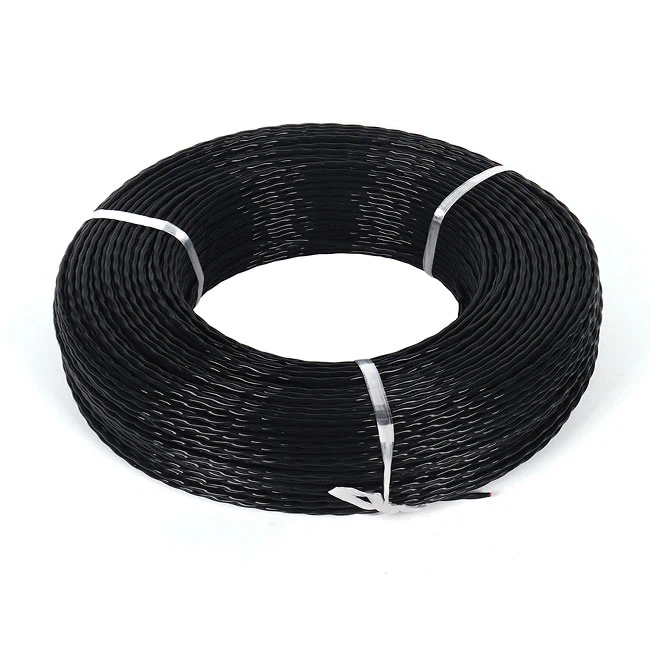
Suitable For VS Not Suitable: Choose These Scenes Correctly
Based on practical experience, the UV resistance of UL20710 is suitable for most semi outdoor and short-term exposure wiring scenarios:
Recommended use scenarios: equipment internal leads, exposed short wires of cabinet, temporary wiring of outdoor equipment, wiring under sunshade, short distance wiring of photovoltaic supporting, high-temperature and aging resistant wiring of industrial equipment. These scenes have moderate UV irradiation intensity, and the wires can remain stable for a long time without the need for additional complex protection.
Cautious usage scenarios: long-term outdoor bare application, unobstructed exposure to sunlight on rooftops, outdoor overhead long lines, strong ultraviolet industrial environments. For such scenarios, it is recommended to choose dedicated outdoor UV resistant cables or install sun protection sheaths on UL20710 to balance performance and lifespan.
Test Experience: How Much UV Resistance Can It Withstand?
We have conducted a simple aging comparison test, exposing UL20710 and regular UL multi-core wires to outdoor sunlight for 3 months, and observing the status once a week:
Ordinary fluoroplastic thread: The outer layer is noticeably yellow, with slight cracks appearing when bent, and the texture feels hard; UL20710 wire: The outer color remains almost unchanged, the bending is still soft, there are no cracks or powdering, and the insulation resistance test data is stable.
This result is very intuitive. The UV resistance of UL20710 is much better than that of conventional industrial wires, and it is completely sufficient for daily outdoor exposure. It is a reliable choice that can withstand sunlight without excessive protection.
UL20710 UV Resistant, But Do Not Overly Rely On It
Returning to the original issue: UL20710 multi-core copper wire has excellent resistance to ultraviolet radiation, thanks to the stable structure of FEP fluoroplastic, which can resist daily sunlight exposure and delay aging and cracking; But it is not a dedicated all-weather outdoor line, and in extreme strong sunlight environments, simple protection is more effective.
When selecting and wiring, focus on two key points: identify the regular FEP material UL20710 wire and decide whether to install protection based on the intensity of sunlight. It can not only give play to its advantages of high temperature resistance and aging resistance, but also avoid unnecessary losses, so that the wire can be used longer and safer.
If your wiring scenario is special and you are unsure whether it is suitable, you may want to judge based on the duration of sunlight and exposure level in the environment. If you are really hesitant, you can do simple protection, after all, stability and durability are the core requirements of wiring.