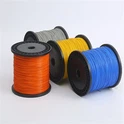
As a supplier of PTFE insulated wire, I've witnessed the widespread application of this remarkable product across various industries. PTFE insulated wire is renowned for its outstanding electrical properties, chemical resistance, and high-temperature tolerance. However, like all materials, it undergoes aging processes that can affect its performance over time. In this blog, I'll delve into the aging characteristics of PTFE insulated wire, exploring the factors that contribute to aging and how these changes impact the wire's functionality.
Physical and Chemical Aging Mechanisms
The aging of PTFE insulated wire primarily involves physical and chemical changes within the PTFE insulation. Physically, PTFE can experience changes in its mechanical properties due to environmental factors such as temperature, humidity, and mechanical stress. Chemically, PTFE can react with certain substances in its environment, leading to degradation of the insulation material.
Temperature - Induced Aging
One of the most significant factors affecting the aging of PTFE insulated wire is temperature. PTFE is known for its high - temperature resistance, with a continuous use temperature of up to 260°C. However, prolonged exposure to high temperatures can cause the PTFE to undergo thermal degradation. At elevated temperatures, the molecular chains in PTFE can break, leading to a decrease in the material's mechanical strength and flexibility. This can result in cracking and brittleness of the insulation, which in turn can expose the conductor and compromise the wire's electrical insulation properties.
For example, in industrial applications where PTFE insulated wire is used in high - temperature environments such as ovens, furnaces, or aerospace engines, the wire may experience accelerated aging due to the constant heat exposure. Over time, the insulation may become thinner and more prone to damage, increasing the risk of short - circuits and electrical failures.
Chemical Aging
PTFE is highly resistant to most chemicals, but it can still be affected by certain aggressive substances. For instance, molten alkali metals and some fluorinating agents can react with PTFE, causing chemical degradation. In industrial settings where PTFE insulated wire may come into contact with chemicals during manufacturing processes or in chemical storage facilities, the insulation can be gradually eroded.
Chemical aging can also occur due to exposure to moisture and pollutants in the environment. Although PTFE has low water absorption, long - term exposure to high humidity can lead to the formation of a thin layer of water on the surface of the insulation, which can promote the growth of microorganisms and the corrosion of the conductor. Additionally, pollutants such as sulfur dioxide and nitrogen oxides in the air can react with PTFE over time, causing discoloration and degradation of the insulation.
Mechanical Aging
Mechanical stress is another important factor in the aging of PTFE insulated wire. Bending, twisting, and vibration can cause the insulation to crack or separate from the conductor. In applications where the wire is frequently moved or subjected to mechanical forces, such as in robotic arms or flexible cable assemblies, the insulation can be damaged over time.
The repeated flexing of the wire can also lead to the development of micro - cracks in the PTFE insulation. These micro - cracks can act as pathways for moisture and chemicals to penetrate the insulation, further accelerating the aging process. Moreover, mechanical stress can cause the conductor to break, especially if the wire is under tension or compression for extended periods.
Impact of Aging on Electrical Properties
The aging of PTFE insulated wire can have a significant impact on its electrical properties. As the insulation degrades, the wire's dielectric strength, insulation resistance, and capacitance can change.
Dielectric Strength
Dielectric strength is the ability of an insulating material to withstand an electric field without breaking down. As PTFE ages, its dielectric strength can decrease due to the formation of cracks and voids in the insulation. These defects can create areas of high electric field concentration, increasing the risk of electrical breakdown. In high - voltage applications, a decrease in dielectric strength can lead to arcing and short - circuits, which can cause equipment damage and pose a safety hazard.
Insulation Resistance
Insulation resistance is a measure of the ability of the insulation to prevent the flow of electric current. Aging can cause a decrease in insulation resistance as the insulation material becomes more conductive due to chemical degradation and moisture absorption. A low insulation resistance can result in leakage currents, which can waste energy and cause interference in electrical circuits.
Capacitance
Capacitance is the ability of a wire to store electrical energy. As PTFE ages, the capacitance of the wire can change due to changes in the insulation's dielectric constant and thickness. A change in capacitance can affect the performance of electrical circuits, especially in high - frequency applications where the capacitance of the wire can influence signal transmission.
Detecting and Mitigating Aging
To ensure the reliable operation of PTFE insulated wire, it's important to detect and mitigate the effects of aging. Regular inspection and testing can help identify early signs of aging, such as cracks, discoloration, and changes in electrical properties.
Inspection
Visual inspection is the simplest way to detect aging in PTFE insulated wire. Look for signs of cracks, brittleness, and discoloration on the surface of the insulation. Any visible damage to the insulation should be carefully examined, as it may indicate more serious internal problems.
Testing
Electrical testing can provide more detailed information about the condition of the wire. Insulation resistance testing can be used to measure the ability of the insulation to prevent current leakage. Dielectric strength testing can determine the maximum voltage that the insulation can withstand without breaking down. Capacitance testing can detect changes in the wire's electrical properties due to aging.
To mitigate the effects of aging, it's important to select the right PTFE insulated wire for the application. Consider factors such as temperature, chemical exposure, and mechanical stress when choosing the wire. Additionally, proper installation and maintenance can help extend the lifespan of the wire. Avoid over - bending or over - stretching the wire during installation, and protect the wire from environmental factors such as moisture and chemicals.


Our PTFE Insulated Wire Products
At our company, we offer a wide range of high - quality PTFE Insulated Wires designed to meet the diverse needs of our customers. Our wires are manufactured using advanced technology and strict quality control measures to ensure excellent performance and long - term reliability.
One of our popular products is the UL1180 wire, which is suitable for a variety of applications, including aerospace, automotive, and industrial electronics. This wire is known for its high - temperature resistance, excellent electrical insulation properties, and mechanical flexibility.
We also provide industrial flexible cables that are specifically designed for use in harsh industrial environments. These cables are resistant to chemicals, abrasion, and high temperatures, making them ideal for applications such as robotics, automation, and power distribution.
Contact Us for Procurement
If you're in need of high - quality PTFE insulated wire for your application, we'd love to hear from you. Our team of experts can help you select the right product based on your specific requirements and provide you with detailed technical support. Whether you're a small - scale manufacturer or a large - scale industrial enterprise, we have the products and services to meet your needs. Contact us today to start a procurement discussion and find the best PTFE insulated wire solution for your business.