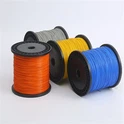
In electrical wiring engineering, UL10316 single core copper wire is an indispensable basic material. Whether it is household installation wiring or fixed wiring of industrial equipment, its conductivity and stability have always been the core advantages. But in practical applications, many people encounter a headache problem, which is that the copper wire gradually turns yellow, black, and even falls off in powder form, which is oxidation causing damage.
I have been involved in many cable application projects over the years, from ordinary residential decoration to mining equipment wiring, and have seen too many rework and equipment failures caused by oxidation. In fact, oxidation is not an inevitable "natural aging", it is essentially the result of chemical reactions between copper and oxygen, moisture in the air, and corrosive substances in the environment. As long as the key details in engineering practice are grasped, oxidation risks can be effectively avoided, and cables can maintain optimal performance in the long term.
From the perspective of product selection, this is the foundation for eliminating oxidation hazards. The core of high-quality UL10316 single core copper wire lies in the purity of the copper material and the production process. Legitimate and compliant products will use high-purity electrolytic copper with a purity of over 99.9%. This copper material has fewer impurities, stable crystal structure, and much higher corrosion resistance than low purity copper materials.
When purchasing, don't just look at the price, focus on checking the UL certification certificate and production process parameters. For example, UL10316 has clear requirements for the annealing temperature and tensile strength of copper wire. Regular products will indicate detailed parameters in the specification sheet, while low-priced and inferior cables often cut corners in these links, resulting in poor conductivity and easy oxidation. In addition, the insulation material of the cable is also crucial. High quality insulation can isolate external moisture and corrosive gases, further protecting the copper wire. When purchasing, it is necessary to confirm whether the temperature and weather resistance of the insulation layer meet the requirements of the project scenario.
The next step is environmental adaptation, and the focus of protection varies greatly in different scenarios. The oxidation rate of copper is directly related to environmental humidity, temperature, and corrosive media. When the humidity exceeds 60%, the oxidation reaction will accelerate significantly. For every 10 ℃ increase in temperature, the oxidation rate will increase by about 2 times. This is a pattern that I have verified in multiple projects.
When laying, more attention should be paid to scene adaptation: in high-risk corrosive environments such as coastal areas and mines, it is recommended to install stainless steel protective sleeves to isolate salt spray and sulfide gases; Indoor ordinary wiring should avoid laying cables directly on damp walls or near air conditioning vents. When storing, keep the original packaging sealed. If the packaging is damaged, immediately wrap it again with moisture-proof plastic film, especially for fine specification cables (such as 22AWG), which have a relatively larger surface area and higher oxidation risk, and require proper sealing protection.
The construction details are the key factor determining whether oxidation occurs, and many oxidation problems stem from non-standard construction. I once handled a project where the construction team cut copper wire but did not seal the ends in a timely manner, resulting in the wire ends being directly exposed to the air. Within just 3 days, the wire ends turned yellow and oxidized. When rebuilding, all oxidized wire ends had to be cut off, which wasted time and increased costs.
The correct construction steps should pay attention to these points: after cutting the copper wire, the end should be immediately sealed with heat shrink tubing or special anti-oxidation sealant to block oxygen and moisture contact; When laying, avoid excessive bending and dragging to prevent damage to the insulation layer. Once cracks appear in the insulation layer, moisture and corrosive gases will invade, and the oxidation rate of copper wire will be greatly accelerated; The crimping of joints should be standardized, using specialized crimping pliers to ensure tight contact and avoid heat generation due to excessive contact resistance. High temperatures can accelerate copper wire oxidation and may also cause insulation layer aging.
Daily maintenance cannot be ignored, and regular inspections of cable operation status should be carried out. For example, in industrial equipment wiring, the joints and cable surface should be inspected once a month. If the insulation layer is damaged or the copper wire turns yellow or black, it needs to be dealt with in a timely manner. Mild oxidation can be removed by wiping with a special antioxidant cleaner, and severe oxidation requires replacing the cable to avoid further hidden dangers. At the same time, it is necessary to avoid long-term overload operation of cables, as the high temperature generated by overload can damage the crystal structure of copper materials and accelerate oxidation. Therefore, it is necessary to strictly follow the rated current carrying capacity specifications of UL10316 for use.
In fact, the oxidation of UL10316 single core copper wire is essentially a detailed control of the entire process of "product selection environment construction maintenance". There is no absolute 'universal solution for oxidation prevention', for example, in extreme high temperature and high salt spray environments, even if basic protection is done well, protective sleeves need to be replaced regularly, which is an unavoidable boundary situation.
In engineering practice, there is no one solution that can adapt to all scenarios, nor is there an absolute possibility of "zero oxidation". What we can do is to develop a refined protection plan based on specific project parameters and environmental data. If you encounter oxidation difficulties in specific scenarios in actual projects, such as uncertain protection parameters for certain environments, or need to check the specific process requirements of UL10316, you can leave a message for communication.
Apr 02, 2026
How to prevent oxidation of UL10316 single core copper wire?
Send Inquiry

Sarah Chen
Marketing Specialist driving brand growth through strategic campaigns and customer engagement. Let's talk about how we're reaching new markets worldwide.
Popular Blog Posts