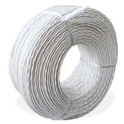
Capacitance is a crucial electrical property that plays a significant role in the performance of wires and cables. When it comes to UL1886 tin plated FEP insulated wire, understanding its capacitance is essential for various applications. As a reliable supplier of UL1886 tin plated FEP insulated wire, I am here to delve into the topic and shed light on what the capacitance of this wire entails.
Understanding Capacitance
Before we explore the capacitance of UL1886 tin plated FEP insulated wire, let's first understand what capacitance is. Capacitance is the ability of a component or circuit to store an electrical charge. It is measured in farads (F), although in practical applications, smaller units such as microfarads (μF), nanofarads (nF), and picofarads (pF) are more commonly used.
In the context of wires and cables, capacitance is determined by several factors, including the geometry of the conductor, the dielectric material used for insulation, and the distance between conductors. The capacitance of a wire affects its electrical performance, such as signal transmission, impedance matching, and electromagnetic interference (EMI) susceptibility.
Factors Affecting the Capacitance of UL1886 Tin Plated FEP Insulated Wire
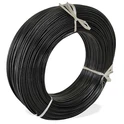
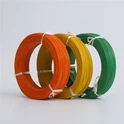
UL1886 tin plated FEP insulated wire is a type of insulated single core copper wire that consists of a tin-plated copper conductor surrounded by a fluorinated ethylene propylene (FEP) insulation layer. The following factors influence the capacitance of this wire:
-
Conductor Geometry: The size and shape of the conductor play a role in determining the capacitance. A larger conductor diameter generally results in higher capacitance, as it provides more surface area for charge storage. Additionally, the spacing between conductors in a multi-conductor cable affects the capacitance between them.
-
Dielectric Material: The dielectric material used for insulation has a significant impact on the capacitance. FEP is a high-performance polymer with excellent electrical properties, including low dielectric constant and loss tangent. A lower dielectric constant means that the material can store less electrical charge per unit volume, resulting in lower capacitance.
-
Insulation Thickness: The thickness of the FEP insulation layer also affects the capacitance. A thicker insulation layer increases the distance between the conductor and any nearby conductors or ground planes, reducing the capacitance.
-
Environmental Conditions: Temperature, humidity, and other environmental factors can influence the capacitance of the wire. Changes in temperature can cause the dielectric material to expand or contract, altering its electrical properties and capacitance.
Measuring the Capacitance of UL1886 Tin Plated FEP Insulated Wire
To determine the capacitance of UL1886 tin plated FEP insulated wire, specialized equipment such as a capacitance meter or an impedance analyzer is used. These instruments apply a known voltage or current to the wire and measure the resulting charge or impedance. The capacitance is then calculated based on the measured values and the known properties of the wire.
It is important to note that the capacitance of a wire can vary depending on the measurement method, test setup, and environmental conditions. Therefore, it is recommended to follow standardized test procedures and use calibrated equipment to ensure accurate and reliable measurements.
Typical Capacitance Values for UL1886 Tin Plated FEP Insulated Wire
The capacitance of UL1886 tin plated FEP insulated wire can vary depending on its specific design and dimensions. However, typical capacitance values for this type of wire range from a few picofarads per foot (pF/ft) to several tens of picofarads per foot. For example, a single-core UL1886 wire with a small conductor diameter and a thin insulation layer may have a capacitance of around 10 pF/ft, while a larger wire with a thicker insulation layer may have a capacitance of 30 pF/ft or more.


It is important to consult the manufacturer's specifications or technical data sheets for the exact capacitance values of the UL1886 tin plated FEP insulated wire you are using. These documents provide detailed information about the wire's electrical properties, including capacitance, impedance, and attenuation.
Importance of Capacitance in UL1886 Tin Plated FEP Insulated Wire Applications
The capacitance of UL1886 tin plated FEP insulated wire is an important consideration in various applications, including:
-
Signal Transmission: In high-speed data transmission applications, such as Ethernet, USB, and HDMI, the capacitance of the wire affects the signal integrity. A high capacitance can cause signal distortion, attenuation, and crosstalk, leading to errors and reduced data transfer rates. Therefore, it is crucial to select a wire with low capacitance to ensure reliable signal transmission.
-
Impedance Matching: Capacitance is one of the factors that determine the characteristic impedance of a wire. Impedance matching is essential for efficient power transfer and minimizing reflections in a circuit. By selecting a wire with the appropriate capacitance, it is possible to achieve the desired impedance and optimize the performance of the system.
-
Electromagnetic Interference (EMI) Suppression: Capacitance can also help in reducing electromagnetic interference (EMI) in a wire. By providing a path for the high-frequency noise to flow to ground, the capacitance of the wire can act as a low-pass filter, attenuating the unwanted EMI signals.
Applications of UL1886 Tin Plated FEP Insulated Wire
UL1886 tin plated FEP insulated wire is widely used in various industries and applications due to its excellent electrical and mechanical properties. Some common applications include:
-
Industrial Automation: In industrial automation systems, UL1886 wire is used for connecting sensors, actuators, and control devices. Its high temperature resistance, chemical resistance, and flexibility make it suitable for harsh industrial environments.
-
Aerospace and Defense: The aerospace and defense industries require wires that can withstand extreme conditions, such as high temperatures, radiation, and vibration. UL1886 tin plated FEP insulated wire meets these requirements and is used in aircraft wiring, missile systems, and other aerospace applications.
-
Medical Equipment: Medical equipment often requires wires that are safe, reliable, and biocompatible. UL1886 wire is used in medical devices such as patient monitors, surgical instruments, and diagnostic equipment.
-
Telecommunications: In telecommunications systems, UL1886 wire is used for connecting network devices, such as routers, switches, and servers. Its low capacitance and high signal integrity make it suitable for high-speed data transmission.
Choosing the Right UL1886 Tin Plated FEP Insulated Wire
When selecting UL1886 tin plated FEP insulated wire for your application, it is important to consider the following factors:
-
Capacitance: As discussed earlier, the capacitance of the wire affects its electrical performance. Choose a wire with a capacitance that is suitable for your specific application requirements.
-
Conductor Size: The conductor size determines the current-carrying capacity of the wire. Select a wire with a conductor size that can handle the expected current without overheating.
-
Insulation Thickness: The insulation thickness affects the capacitance, mechanical strength, and flexibility of the wire. Consider the environmental conditions and application requirements when choosing the insulation thickness.
-
Temperature Rating: UL1886 wire is available in different temperature ratings. Select a wire with a temperature rating that can withstand the operating temperature of your application.
-
UL Certification: Ensure that the wire is UL certified to meet the safety and performance standards required for your application.
Conclusion
The capacitance of UL1886 tin plated FEP insulated wire is an important electrical property that affects its performance in various applications. By understanding the factors that influence capacitance and choosing the right wire for your specific requirements, you can ensure reliable signal transmission, impedance matching, and EMI suppression.
As a trusted supplier of UL1886 tin plated FEP insulated wire, we offer a wide range of products with different specifications and capacitance values to meet your diverse needs. Our team of experts is available to provide technical support and assistance in selecting the right wire for your application.
If you are interested in learning more about our UL1886 tin plated FEP insulated wire or have any questions regarding capacitance or other electrical properties, please feel free to contact us. We look forward to discussing your requirements and providing you with the best solutions for your wiring needs.
References
- "Handbook of Electrical Engineering," by John H. Hockenbury.
- "Electrical Wiring Handbook," by Tom Henry.
- Manufacturer's specifications and technical data sheets for UL1886 tin plated FEP insulated wire.