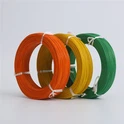
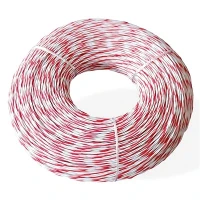
Hey there, folks! As a multi core copper wire supplier, I get asked a ton about the resistance to abrasion of our products. So, I thought I'd write this blog to shed some light on it.
First off, let's talk about what abrasion resistance actually means. In simple terms, it's the ability of a material to withstand the wear and tear that comes from rubbing against other surfaces. When it comes to multi core copper wire, this is super important because these wires are often used in environments where they're likely to come into contact with other objects.
Imagine a manufacturing plant where heavy machinery is constantly in motion. Our multi core copper wires are used to power and control these machines. During the normal operation of the machinery, the wires might get rubbed against metal structures, conveyor belts, or other equipment. Without good abrasion resistance, the outer insulation of the wire could get damaged. Once the insulation is compromised, it can lead to a whole host of problems, like short circuits, electrical shocks, and even fire hazards.
So, what goes into making our multi core copper wires resistant to abrasion? Well, it all starts with the materials we use. The outer insulation of our wires is made from high - quality polymers that are specifically chosen for their durability. These polymers have excellent mechanical properties, meaning they can stand up to a fair amount of rubbing and scraping without breaking down.
For example, we use certain types of thermoplastic elastomers (TPE) in some of our wire insulation. TPEs are a great choice because they combine the elasticity of rubber with the processability of plastics. They can stretch and bend without losing their shape, and they have a high resistance to abrasion. We also use polyvinyl chloride (PVC) in some of our products. PVC is well - known for its toughness and resistance to abrasion, and it's also relatively inexpensive, which helps keep our costs down and, in turn, offers our customers a more affordable product.
But it's not just about the material of the insulation. The construction of the wire also plays a role in its abrasion resistance. Our multi core copper wires are designed with multiple layers. The inner copper conductors are usually surrounded by a layer of insulation, and then there might be additional shielding layers, depending on the type of wire. These additional layers not only help with electrical performance but also add an extra level of protection against abrasion.
Let's take a look at some of our specific products and how their abrasion resistance is important in different applications.
Multi core shielded cable
The Multi core shielded cable is often used in data transmission and signal - handling applications. In these scenarios, the wires are usually installed in confined spaces, such as inside computer cabinets or network racks. They can rub against the edges of the cabinets or other cables. The high abrasion resistance of our multi core shielded cable ensures that the shielding remains intact. If the shielding gets damaged due to abrasion, it can lead to electromagnetic interference (EMI), which can disrupt the data transmission and cause errors.
Multi Core Power Cables
Our Multi Core Power Cables are used to carry large amounts of electrical power in industrial and commercial settings. These cables are often laid on the ground or run through conduits. They can be exposed to rough surfaces, like concrete floors or sharp edges inside the conduits. The good abrasion resistance of these cables means that the insulation won't wear out easily. This is crucial because any damage to the insulation can lead to power outages and safety risks.
Multi core control cable
The Multi core control cable is used to control the operation of various equipment. It's commonly found in automation systems, where the cables need to be flexible and able to withstand repeated movement. In these applications, the cables are often bent and flexed, and they can rub against the moving parts of the equipment. The abrasion resistance of our multi core control cable ensures that the wires can continue to function properly over a long period of time, even in these challenging conditions.


We also test our multi core copper wires rigorously to ensure their abrasion resistance meets or exceeds industry standards. We use a variety of test methods, such as the Taber abrasion test, which involves rubbing the wire against a rotating abrasive wheel for a set number of cycles. We measure the amount of wear on the wire's insulation and compare it to our target values. If the wire doesn't pass the test, we go back to the drawing board and make adjustments to the material or the manufacturing process.
In addition to the material and construction, we also offer different levels of abrasion resistance to meet the diverse needs of our customers. Some applications require only moderate abrasion resistance, while others need a very high level. For example, if you're using the wire in a relatively clean and protected environment, like an office building, a wire with moderate abrasion resistance might be sufficient. But if you're working in a harsh industrial environment, like a mining site, you'll need a wire with a much higher level of abrasion resistance.
So, if you're in the market for multi core copper wire and you're concerned about abrasion resistance, you've come to the right place. We've spent years perfecting our products to ensure they offer the best possible protection against abrasion. Whether you need a Multi core shielded cable, Multi Core Power Cables, or Multi core control cable, we've got you covered.
If you have any questions about our products or need help choosing the right wire for your application, don't hesitate to reach out. We're here to help you make the best decision for your project. Contact us to start a conversation about procurement and see how our multi core copper wires can meet your needs.
References
- ASTM International. (20XX). Standard test methods for abrasion resistance of materials.
- IEEE Standards Association. (20XX). Electrical insulation standards for wires and cables.