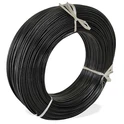
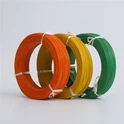
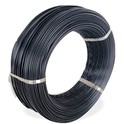
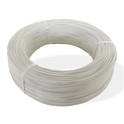
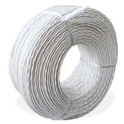
As a supplier of UL1670 tin plated ETFE insulated wire, I often encounter inquiries regarding the standard length of this specialized wire. Understanding the standard length is crucial for both manufacturers and end - users, as it affects installation, cost, and overall project planning. In this blog, I'll delve into the factors that determine the standard length of UL1670 tin plated ETFE insulated wire, the common lengths available in the market, and how it compares to other related wires.
Factors Determining the Standard Length
The standard length of UL1670 tin plated ETFE insulated wire is influenced by several key factors. First and foremost is the manufacturing process. Producing wire involves a series of steps, including drawing, plating, and insulation application. The machinery used in these processes has limitations on the continuous length of wire it can produce without interruptions. For instance, the spooling equipment may have a maximum capacity, which restricts the length of wire that can be wound onto a single spool.
Another important factor is transportation. Longer lengths of wire can be more challenging to transport due to their size and weight. Shipping costs also increase with the length and weight of the wire. Therefore, manufacturers need to balance the desire to offer longer lengths for customer convenience against the practicalities of transportation.
Market demand also plays a significant role. Different industries have different requirements for wire length. For example, the aerospace industry may need shorter, more precise lengths for use in avionics systems, while the telecommunications industry might require longer lengths for large - scale network installations. Manufacturers need to adapt to these varying demands to remain competitive in the market.
Common Standard Lengths in the Market
In the market, there are several common standard lengths for UL1670 tin plated ETFE insulated wire. A very common length is 1000 feet. This length is popular because it strikes a good balance between being long enough for many medium - sized projects and being manageable for transportation and handling. It is often used in commercial building wiring, where it can be easily cut and installed in different sections of a building.
Another frequently available length is 500 feet. This shorter length is suitable for smaller projects, such as in the electronics manufacturing of consumer products. It is also more affordable for customers who only need a limited amount of wire for their specific application.

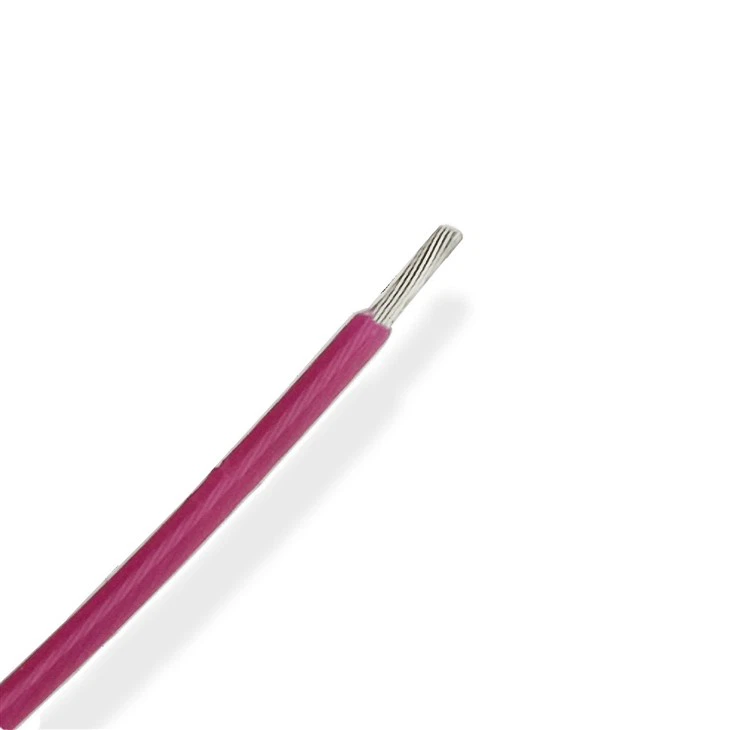
Some manufacturers also offer custom lengths based on customer requirements. For large - scale industrial projects, customers may request lengths of 5000 feet or more. However, these custom lengths usually come with longer lead times and may require special arrangements for transportation.
Comparison with Other Related Wires
When comparing the standard lengths of UL1670 tin plated ETFE insulated wire with other related wires, we can see some similarities and differences. For example, the UL10086 Teflon wire also has common lengths of 1000 feet and 500 feet. However, due to its different insulation material (Teflon), it may have different handling characteristics and cost structures. Teflon - insulated wires are often used in high - temperature and high - voltage applications, and the standard lengths are adjusted according to the typical needs of these industries.
The kabel 600V is another type of wire. It is designed for specific voltage requirements and may have different standard lengths based on its target applications. For instance, it might be more commonly available in shorter lengths for use in control panels and low - voltage electrical systems.
The tin stranded wire has its own set of standard lengths. Stranded wire is more flexible than solid wire, and its standard lengths are often determined by the ease of use in applications that require flexibility, such as in robotics and automotive wiring.
Quality Assurance and Length Accuracy
As a supplier, we understand the importance of quality assurance, especially when it comes to the length of the wire. We use advanced measuring equipment to ensure that each spool of UL1670 tin plated ETFE insulated wire meets the specified length. Our quality control team conducts regular checks during the manufacturing process to verify the accuracy of the wire length.
We also provide detailed documentation with each shipment, including the exact length of the wire on each spool. This transparency helps our customers plan their projects more effectively and ensures that they are getting the quantity of wire they paid for.
Advantages of Our UL1670 Tin Plated ETFE Insulated Wire
Our UL1670 tin plated ETFE insulated wire offers several advantages. The tin plating provides excellent corrosion resistance, which extends the lifespan of the wire, especially in harsh environments. The ETFE insulation has high - temperature resistance, chemical resistance, and low flammability, making it suitable for a wide range of applications.
We also offer a variety of standard lengths and can accommodate custom length requests. Our experienced customer service team is always available to assist you in choosing the right length for your project. Whether you are working on a small electronics project or a large - scale industrial installation, we have the wire solutions to meet your needs.
Contact Us for Procurement
If you are interested in purchasing UL1670 tin plated ETFE insulated wire, we invite you to contact us for further discussion. Our team of experts can provide you with detailed product information, pricing, and delivery options. We are committed to providing high - quality products and excellent customer service. Let's work together to find the best wire solutions for your project.
References
- Wire Manufacturing Handbook. This comprehensive handbook provides in - depth information on the wire manufacturing process, including factors affecting wire length.
- Industry Reports on Electrical Wires and Cables. These reports offer insights into market demand, common wire lengths, and trends in the electrical wire industry.