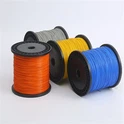
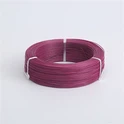
What is the Thermal Conductivity of ETFE Insulated Wire?
As a supplier of ETFE insulated wire, I often get asked about the technical specifications of our products, and one question that comes up quite frequently is about the thermal conductivity of ETFE insulated wire. In this blog post, I'll delve into what thermal conductivity means, how it applies to ETFE insulated wire, and why it matters for various applications.
Understanding Thermal Conductivity
Thermal conductivity is a measure of a material's ability to conduct heat. It is defined as the quantity of heat (in watts) that passes through a unit area (in square meters) of a material in a direction normal to that area per unit temperature gradient (in kelvins per meter). In simpler terms, it tells us how easily heat can move through a material. A high thermal conductivity means that heat can pass through the material quickly, while a low thermal conductivity indicates that the material is a good insulator and resists the flow of heat.
The SI unit for thermal conductivity is watts per meter-kelvin (W/(m·K)). Different materials have different thermal conductivities, which can vary widely depending on their composition, structure, and temperature. For example, metals like copper and aluminum have high thermal conductivities, making them excellent conductors of heat. On the other hand, materials like rubber and plastic have low thermal conductivities, making them good insulators.
Thermal Conductivity of ETFE
ETFE, or ethylene tetrafluoroethylene, is a fluoropolymer that is commonly used as an insulation material for wires and cables. It is known for its excellent chemical resistance, high mechanical strength, and good electrical properties. When it comes to thermal conductivity, ETFE has a relatively low value compared to metals.
The thermal conductivity of ETFE typically ranges from about 0.2 to 0.3 W/(m·K). This low thermal conductivity makes ETFE an effective insulator, which is one of the reasons why it is widely used in applications where heat transfer needs to be minimized. For example, in electrical wiring, ETFE insulation helps to prevent the loss of electrical energy due to heat dissipation and also protects the conductors from external heat sources.
Importance of Thermal Conductivity in ETFE Insulated Wire
The thermal conductivity of ETFE insulated wire is an important factor to consider in many applications. Here are some of the key reasons why:
Electrical Efficiency
In electrical systems, heat can cause energy losses. When a wire conducts electricity, it generates heat due to the resistance of the conductor. If the insulation material has a high thermal conductivity, this heat can be easily transferred to the surrounding environment, leading to energy losses. By using ETFE insulation with low thermal conductivity, the heat is retained within the wire, reducing energy losses and improving the overall electrical efficiency of the system.
Safety
Heat can also pose a safety risk in electrical systems. If a wire gets too hot, it can melt the insulation, expose the conductors, and potentially cause a short circuit or even a fire. ETFE insulation with low thermal conductivity helps to keep the wire cool by preventing the transfer of heat from the conductor to the outside. This reduces the risk of overheating and improves the safety of the electrical system.
Temperature Resistance
ETFE has a high temperature resistance, which means it can maintain its mechanical and electrical properties at elevated temperatures. The low thermal conductivity of ETFE helps to protect the wire from extreme temperatures by acting as a barrier between the conductor and the external environment. This allows the wire to operate safely in high-temperature applications, such as in industrial ovens, aerospace systems, and automotive engines.
Applications of ETFE Insulated Wire
ETFE insulated wire is used in a wide range of applications where its unique properties, including low thermal conductivity, are highly valued. Here are some of the common applications:
Aerospace
In the aerospace industry, weight, reliability, and safety are of utmost importance. ETFE insulated wire is lightweight, has excellent temperature resistance, and provides good electrical insulation. Its low thermal conductivity helps to protect the wiring from the extreme temperatures encountered during flight, making it an ideal choice for aircraft wiring systems.
Automotive
The automotive industry is constantly looking for ways to improve the performance and efficiency of vehicles. ETFE insulated wire is used in various automotive applications, such as engine wiring, battery management systems, and in-vehicle networking. The low thermal conductivity of ETFE helps to reduce energy losses and improve the overall efficiency of the electrical system, while its high temperature resistance ensures reliable operation in the harsh environment under the hood.
Industrial
In industrial settings, ETFE insulated wire is used in a variety of applications, including machinery, control systems, and power distribution. Its chemical resistance and low thermal conductivity make it suitable for use in harsh environments where exposure to chemicals, heat, and moisture is common. For example, in chemical plants, ETFE insulated wire can withstand the corrosive effects of chemicals and prevent the transfer of heat from the equipment to the wiring.


Our ETFE Insulated Wire Products
As a supplier of ETFE insulated wire, we offer a wide range of products to meet the diverse needs of our customers. Our products include kabel 600V, single copper cable, and high heat resistant wire.
Our kabel 600V is designed for use in low-voltage electrical systems. It features a high-quality ETFE insulation that provides excellent electrical insulation and low thermal conductivity. The single copper cable is a reliable option for applications where a single conductor is required. It is available in various sizes and can be customized to meet specific requirements. Our high heat resistant wire is specifically designed for use in high-temperature environments. It can withstand temperatures up to [specific temperature] and provides reliable performance even under extreme conditions.
Conclusion
The thermal conductivity of ETFE insulated wire is an important property that has a significant impact on its performance and suitability for various applications. With its low thermal conductivity, ETFE insulation helps to improve electrical efficiency, enhance safety, and provide temperature resistance. As a supplier of ETFE insulated wire, we are committed to providing high-quality products that meet the needs of our customers. Whether you are in the aerospace, automotive, or industrial industry, our ETFE insulated wire products can offer the performance and reliability you need.
If you are interested in learning more about our ETFE insulated wire products or have any questions about thermal conductivity or other technical specifications, please feel free to contact us. We would be happy to discuss your requirements and provide you with the best solutions for your application.
References
- Incropera, F. P., & DeWitt, D. P. (2002). Fundamentals of Heat and Mass Transfer. John Wiley & Sons.
- Wikipedia contributors. (2023, July 12). Thermal conductivity. In Wikipedia, The Free Encyclopedia. Retrieved [date] from https://en.wikipedia.org/wiki/Thermal_conductivity
- Manufacturer's technical data sheets for ETFE insulation materials.