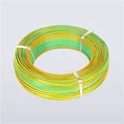
To ensure the safe operation of the power system, it is necessary to conduct inspections on electrical performance, mechanical performance, appearance and quality, environment and laying parameters before cable construction to avoid serious safety accidents or equipment damage.
1. Electrical performance testing
Electrical performance testing is one of the most important inspection items before cable construction, mainly including the following contents:
Direct current resistance of conductor: directly reflects the electrical transmission performance of the cable. Non conformance can lead to cable heating, insulation aging, and even fire hazards. The standard has strict regulations on the direct current resistance values of conductors for cables of different specifications.
Insulation resistance: The resistance of the insulation material between two conductors should be large enough to provide insulation protection. The insulation resistance of the new cable should be ≥ 100M Ω/km.
Finished product voltage test: The cable is required to have sufficient insulation capacity, uniform material without impurities, uniform thickness, and no defects such as sand holes or pinholes.
2. Mechanical Properties Testing
Mechanical properties testing ensures cables remain resistant to damage during installation and service:
Tensile strength and elongation at break: Insulation and sheathing materials must possess adequate strength alongside sufficient flexibility.
Performance should remain stable before and after ageing.
Flexing and bending tests: Particularly for flexible cables, these simulate repeated dragging and bending encountered in actual use to verify durability.
Static Flexing Test: Evaluates mechanical performance when cables are fixed in place.
3. Appearance and quality inspection
Visual Inspection
Confirm the cable outer sheath exhibits no visible defects such as mechanical damage or deformation, serving as the primary defence against breakdown during installation.
Key Inspection Points:
- Thoroughly examine the cable outer sheath surface for scratches, dents, or tears.
- Observe whether the cable shows obvious deformation or kinking.
- Verify the integrity of the cable end seal.
Quality Documentation Verification
Examine certificates of conformity, factory test reports, and other documentation to ensure compliance with national standards such as GB/T 12706.
Key Verification Points:
- Confirm the completeness and validity of product certificates.
- Cross-check all specifications listed in the factory test reports.
- Verify that product specifications and model numbers align with design requirements.
Protective Layer Integrity Inspection
Inspect the cable protective layer for integrity to ensure it remains undamaged during installation.
Inspection Methods:
- Inspect the metallic sheath or armouring for any damage.
- Confirm the protective layer is continuous without interruption.
- Verify the protective layer is securely bonded to the cable body.
- Pay particular attention to the condition of the protective layer at cable bending points.
4. Environmental and laying parameter inspection
Bending Radius: Must meet the specified values (e.g., for paper insulated multi-core power cables, lead sheath should be 15 times the outer diameter, aluminum sheath should be 25 times).
Installation Depth: The depth for directly buried cables is generally not less than 0.7 meters, not less than 1 meter in agricultural fields, and for 35kV and above not less than 1 meter.
Environmental Corrosiveness: Check if the installation path is affected by corrosive substances such as acids, alkalis, or slag, and take protective measures if necessary.
5. Phase and Safety Measures Inspection
Phase Consistency: Verify phase markings at both cable ends to prevent incorrect power system phase sequence.
Joint Positioning: When multiple cables are laid in the same trench, joints should be staggered to avoid concentration.
Safety Measures: Implement measures during construction to prevent twisting and excessive bending; install directional markers at necessary locations.
Personal Protection: Construction personnel must wear protective equipment including hard hats and protective gloves.
For professional specifications such as electrical performance testing and mechanical property assessment prior to cable installation, please feel free to contact us at any time (luna@ironflon.com).