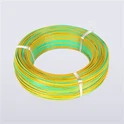
PTFE Wire: The High-Temperature Warrior in Extreme Environments
PTFE electrical wire is the quiet workhorse that keeps critical systems ticking when temperatures spike to levels most materials can't handle. You might never spot it directly, but if you've flown on a commercial airliner or used a high-end kitchen range, you've already put its toughness to work. What makes PTFE wire stand out? All of this comes down to polytetrafluoroethylene (PTFE). A layer of PTFE wrapped around the battery cell can resist foaming heat and irritating chemicals, preventing these chemicals from eroding other wires.
Let's break that down-why is PTFE Teflon electrical wire non-negotiable for extreme jobs? First, its temperature tolerance is what really sells it. This wire handles continuous use at 260°C (hotter than most home ovens get) and even short bursts of 300°C without melting or losing conductivity. That's why aerospace engineers reach for PTFE cable every time for jet engine wiring and cockpit control panels; at 35,000 feet, a heat-related wire failure isn't an option.
But PTFE cable isn't perfect-and that's part of its charm. The catch with PTFE insulated wire is that it's a bit finicky to work with. Unlike regular wires that melt and mold easily, PTFE has an extremely high melting point, so manufacturers have to use special workarounds-things like cold pressing and sintering-to shape it. That extra effort makes PTFE Teflon wire a bit pricier, but when reliability in extreme conditions is non-negotiable, it's worth every cent. You'll also find PTFE insulated wire in medical gear like sterilization machines, where it endures high heat and harsh cleaners day in and day out.
FEP Wire: The Versatile All-Rounder for Everyday High-Tech
FEP cable is the more flexible, easy-going cousin of PTFE cable and it's everywhere you look in modern tech. If you've used a 5G router, a blood dialysis machine, or even a high-end LED light fixture, chances are FEP wire is keeping things connected. FEP (which stands for fluorinated ethylene propylene) is a modified version of PTFE, and that modification gives it some key advantages that make it a favorite for applications where flexibility and ease of use matter just as much as performance.
The star feature of FEP Teflon wire is its processing friendliness. Unlike the precise manufacturing process of PTFE electrical wire, FEP Teflon wire can be extruded and molded using standard plastic processing techniques, just like making pasta and ceramic vases. This not only reduces the production cost of FEP electrical wire, but also allows manufacturers to create complex shapes, such as thin wires bent around tiny electronic components in smartphones. Another major advantage is its transparency - the coating of FEP Teflon wire is transparent, which is a game changer for applications that require visibility into the interior of the wiring (such as in laboratory equipment where scientists monitor fluid flow and electrical connections).
FEP cable can be used continuously at 200 ° C, which meets most industrial and consumer technology needs, and it is as resistant to chemical corrosion as PTFE Teflon cable, making it suitable for most daily chemicals. Its flexibility is another prominent feature: FEP Teflon cable can bend thousands of times without breaking, making it very suitable for constantly moving robotic arms or wearable technology that bends with the body. You can also find FEP insulated cable in solar panels - their UV resistance means they can withstand years of direct sunlight without degradation, keeping these energy producing panels reliably connected.


The Family Resemblance: Why PTFE wire & FEP Wire Are Both Fluoropolymer Stars
Although PTFE insulated wire and FEP insulated wire have different strengths, they belong to the same elite family: fluoropolymer wire. Both types of wires have unparalleled chemical resistance, electrical insulation, and flame retardancy, making them indispensable in the high-tech industry.
Both PTFE and FEP electrical wire have a core superpower, which is their carbon fluorine bond, which is one of the strongest bonds in organic chemistry. This combination enables them to resist chemicals and heat. It also ensures that PTFE and FEP electrical wire are self extinguishing. If a fire occurs nearby, once the flame goes out, they will stop burning. So they are often used in buildings and vehicles where fire safety is crucial. Another common benefit is their excellent electrical insulation. Even at high frequencies, two wires can maintain power flow where needed without leaking (which is why FEP Teflon wire are important in 5G technology).
The key difference lies in balance: PTFE electrical wire prioritizes extreme performance (high temperature, irritating chemicals), while FEP Teflon wire prioritizes multifunctionality (flexibility, ease of processing, transparency). Imagine it as choosing between a heavy-duty work truck (PTFE line) and a sports SUV (FEP line) - both are great, but you choose based on your job. For example, the cooling system of a nuclear power plant will use PTFE Teflon wire due to its high heat resistance, while smart thermostats in homes will use FEP Teflon wire due to its flexibility and cost-effectiveness. This balance is why these two lines have remained correlated for decades - they perfectly complement each other.
How to Pick the Right One: A No-Nonsense Guide for Engineers & Buyers
Choosing between PTFE electrical wire and FEP electrical wire doesn't have to be overly complicated - you just need to ask three simple questions about your project. Let's break it down with real-world examples to make it concrete. Remember: There is no such thing as a "better" wire; there are only wires that are suitable for what you are building.
Q1 : What is the maximum temperature that the wire must withstand?
If your project needs to withstand temperatures above 200°C, such as jet engines or industrial furnaces, PTFE electrical wire and cable is your only choice. It is the only one that can withstand such heat without failing. If your requirements are below 200°C, such as for 5G base stations or medical equipment sterilized by steam, FEP insulated wire and cable will work well and save you money. Boeing has achieved this: PTFE insulated wire and cable enter the engine compartment of the 787 Dreamliner, while FEP insulated wire and cable handle the entertainment system in the cabin.
Q2 : Do you need flexibility or transparency?
If your wires bend a lot when in use, such as on a robot arm; Or you need to see through the coating, such as in laboratory equipment that monitors fluid flow; Then FEP copper wire are the obvious winners. Its flexibility enables it to handle millions of bends without breaking, and the transparent coating makes it easy to detect problems such as blockages. On the other hand, PTFE copper wire and cable is harder and less transparent. It is very suitable for fixed Settings, but not for moving parts or when visibility is required.
Q3 : What's your budget and how much do you need to earn?
PTFE insulated copper wire is more expensive due to its complex manufacturing process, making it the most suitable for high-risk, small batch work in aerospace or military technology. FEP insulated wire and cable sare cheaper and easier to mass produce, making them more suitable for large industrial projects such as consumer electronics or solar power plants. A good rule of thumb is: if FEP insulated copper wire does not cut corners in performance, then choose it. You will enjoy all the benefits of fluoropolymers at a lower cost.


The Future of Fluoropolymer Wires: What's Next for PTFE & FEP?
PTFE insulated copper wire and FEP insulated copper wire have been around for decades, but they're not stuck in the past-innovations in material science are making them even more powerful and versatile. As industries like electric vehicles (EVs), renewable energy, and advanced medicine grow, the demand for high-performance wires is only going up, and PTFE and FEP insulated wire are poised to meet that demand.
One big trend is modifying PTFE insulated wire to be more flexible. Engineers are adding small amounts of other materials to PTFE's coating to make it bendier without losing its high-temperature resistance-this could open up new uses in EV batteries, where wires need to fit in tight spaces and handle heat from charging. For FEP copper wire, the focus is on improving its heat resistance slightly while keeping its flexibility-researchers are tweaking its molecular structure to push its continuous use temperature closer to 220°C, which would let it replace PTFE copper wire in more applications and save costs.
Another exciting development is the rise of "smart" fluoropolymer wires-adding sensors to PTFE and FEP wires that monitor temperature, pressure, or wear in real time. Imagine a chemical plant where PTFE insulated wire not only carries electricity but also alerts operators if it's being exposed to temperatures that are too high, preventing a shutdown. Or an EV where FEP insulated wire tracks battery health while powering the car-these are already being tested in prototype systems.
At the end of the day, PTFE copper wire and FEP copper wire are more than just components-they're the backbone of modern technology. Whether you're flying across the ocean, getting a medical treatment, or charging your phone, these wires are working behind the scenes to keep things safe and reliable. And as technology advances, one thing is clear: PTFE insulated wire and FEP insulated wire will keep evolving right along with it, staying the hidden heroes of the high-tech world.
For PTFE wire and FEP wire, if you have any other questions or would like more detailed information, please feel free to contact our professional service personnel at any time( luna@ironflon.com )We will be on standby throughout the entire process, promptly answering your questions and handling them properly.