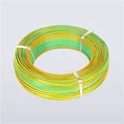
Hey, Dear friends who are engaged in automobile manufacturing and parts procurement, today let's talk about the "key role hidden in cars" - High Temperature automotive wire. Let's explain this "high-temperature resistant powerhouse in the automotive nerve" clearly. Whether you are new to this industry or looking for reliable suppliers to optimize product configurations, you can gain something from reading this article.
First of all, let me ask you a small question: Have you ever thought about how the wires connecting the engine, battery, and sensors in the engine compartment of a car, where the temperature can easily soar to over 150 ℃, and even in turbocharged models, it can reach over 200 ℃? Why do some cars experience aging, cracking, and signal interruption after being driven for three to five years, while others remain stable after being driven for ten years? The answer is simple - choosing the right High Temperature automotive electric wire can avoid these troubles.
Some friends may say, 'Isn't it just a wire? How much difference can high temperature resistance be compared to ordinary ones?' The difference is huge! Ordinary car wires will experience insulation softening, peeling, and even short circuiting and catching fire in high-temperature environments, which not only affects the normal operation of the car but may also pose safety hazards. High Temperature automotive electric wire is tailor-made for the "high-temperature battlefield", capable of withstanding extreme high temperatures while ensuring stable transmission of power and signals, making it a "hardcore player" in the automotive circuit industry.
What is High Temperature Automotive Wire?
Actually, there's no need to overthink it, High Temperature automotive wire,The literal translation is "high-temperature resistant car wire", which has the same core function as ordinary car wires - transmitting electricity and signals, equivalent to the "neural network" of the car. But its special feature is that it can work stably for a long time in high temperature and harsh environments, and will not "strike" due to high temperatures.
For example, the temperature resistance limit of ordinary car wires is about 80 ℃ -105 ℃, which is suitable for use in areas with lower temperatures such as doors, seats, and interiors; The temperature resistance range of high-temperature resistant automotive wire starts at 125 ℃, and high-end models can reach 260 ℃, even withstanding instantaneous high temperature impacts of 300 ℃. It is specifically used in "high-temperature disaster areas" such as engine compartments, exhaust pipes, new energy vehicle battery packs, and motors.
Simply put, ordinary car wires are like "little flowers in a greenhouse", while high-temperature resistant automotive wires are like "cacti in the desert". No matter how harsh the environment is, they can firmly "take root" and ensure the normal operation of various parts of the car.


Key point: Why are more and more car companies choosing high-temperature automotive wire
In recent years, whether it is traditional fuel vehicles or new energy vehicles, the demand for high-temperature resistant automotive wires has been skyrocketing. It is not a matter of car companies following the trend, but an inevitable choice for industry development. In summary, there are three core reasons:
With the upgrading of automotive technology, there are more and more "high-temperature areas"
In the past, the temperature in the engine compartment of gasoline powered cars was relatively controllable, but now it is different: turbocharging technology has become popular, and the power of the engine is increasing, causing the temperature inside the compartment to soar directly; Not to mention new energy vehicles, the battery pack and motor generate a large amount of heat during operation, especially during fast charging. The temperature of the battery pack can reach over 150 ℃, which ordinary wires cannot withstand.
According to industry data, global sales of new energy vehicles will exceed 18 million units in 2024, accounting for 22% of global new car sales. It is expected that this proportion will approach 50% by 2030. The rise of new energy vehicles has directly driven the demand for high-temperature resistant automotive wires - the total length of cables for a single pure electric vehicle generally exceeds 3000 meters, with a significant increase in the proportion of high-voltage cables, which almost all require high-temperature resistance.
In addition, with the increasing intelligence of automobiles, ADAS systems, onboard radars, intelligent cockpits, and other components require a large number of electrical connections. Many of these components are installed near the engine compartment and are exposed to high temperatures for a long time. High temperature resistant automotive wires must be used to ensure signal stability and avoid jamming and malfunction.
Safety requirements are becoming increasingly strict, and high-temperature lines are the "life-saving line"
Whether in Europe, America or Asia, automotive safety standards are constantly upgrading, and line safety is one of the core aspects of automotive safety. If ordinary wires are used in high-temperature areas, once the insulation layer ages and is damaged, it may cause short circuits and fires, with unimaginable consequences.
High temperature resistant automotive wires not only withstand high temperatures, but also have excellent flame retardant and anti leakage performance. Most of them have passed international stringent standards such as ISO 19642 and UL 5580 certification, with a flame retardant level of VW-1. When encountering a fire source, they can effectively prevent the spread of fire, and even do not release toxic and harmful substances. They fully comply with environmental safety requirements such as EU REACH regulations and China RoHS standards.
For car companies, choosing high-temperature resistant automotive wire is not only to meet regulatory requirements, but also to be responsible for consumer safety - after all, no one wants a small wire to cause a major safety accident and affect brand reputation.
Reduce maintenance costs in the later stage and improve the service life of automobiles
Many car companies initially feel that high-temperature resistant automotive wires are slightly more expensive than ordinary wires, and the cost will increase. But in reality, in the long run, it can help car companies save a lot of money.
Ordinary wires will age and break in high temperature environments within 1-2 years, requiring frequent maintenance and replacement. This not only increases the after-sales costs for car manufacturers, but also affects consumers' driving experience; The service life of high-temperature resistant automotive wire can reach more than 10 years, and its anti-aging performance is 200% higher than that of ordinary wires, which can effectively reduce the number of maintenance, reduce after-sales costs, and also improve the overall service life of the car and enhance brand competitiveness.
For example, a certain European and American car company used ordinary wires to make engine compartment wiring harnesses. Every year, there were over 1000 after-sales complaints caused by aging wiring, with repair costs reaching millions of dollars; After switching to high-temperature resistant automotive wire, the number of after-sales complaints decreased by over 90%, and the annual savings in maintenance costs far exceeded the initial increase in procurement costs.
Core advantages of high-temperature resistant automotive wire
Many customers are confused by various parameters when making purchases, such as "temperature resistance", "insulation material", "compliance with what standards". In fact, there is no need to remember too many complex parameters. Remembering these core advantages can quickly determine whether a high-temperature resistant automotive wire is good or not:
- High temperature resistance : The conventional model can withstand temperatures of 125 ℃ -150 ℃ and is suitable for the engine compartment of ordinary fuel vehicles; The high-end model has a temperature resistance of 200 ℃ -260 ℃ and can withstand instantaneous high temperatures of 300 ℃. It is suitable for high temperature scenarios such as new energy vehicle battery packs and turbocharged engines, and can even work normally in low temperature environments of -60 ℃. The high and low temperature switching is stress free, and it is not afraid of extreme weather and working conditions.
- Reliable material and adequate protection : The core conductor is made of high-purity tin plated copper (0.3-50mm ² covering the entire range), which has good conductivity, is not easily oxidized, and has low losses when transmitting power and signals; The insulation layer is made of aerospace grade materials, such as double-layer silicone rubber+fiberglass weaving, fluoroplastics (PTFE \ ETFE \ PFA \ FEP \ XLPE, etc.), PEEK, etc., which not only withstand high temperatures, but also resist oil stains, acid and alkali, arc, and UV radiation. It has passed the IP68 waterproof test and can work stably even in harsh environments.
- Safe and environmentally friendly, in compliance with international standards : halogen-free, zero toxin release, in compliance with IEC 60754 requirements, will not cause harm to the environment and human health; By obtaining certifications from multiple countries such as UL, CE, CCC, IATF16949, whether exporting to Europe, America, Asia, or other regions, we can smoothly pass local regulatory audits without worrying about compliance issues.
- Lightweight and flexible, easy to install : Adopting a thin-walled design, it is lighter and more flexible than ordinary wires, saving 40% of wiring space and adapting to the complex wiring environment inside the car. Whether it is the narrow space of the engine compartment or the dense wiring of the battery pack, it can be easily installed. It can also adapt to different brands of car wire harness automatic crimping equipment, improving installation efficiency.
- High cost performance and long service life : although the cost of early procurement is slightly higher than that of ordinary wires, the service life is 5-10 times that of ordinary wires, with strong anti-aging and anti-wear capabilities, which can effectively reduce the cost of later maintenance and replacement, and it is more cost-effective for long-term use; And it supports 72 hour rapid prototyping, which can quickly adapt to the customized needs of car companies and shorten the research and development cycle.


Practical Guide: Which Automotive Wire Should I Choose for Different Scenarios?
Not all high-temperature resistant automotive wires are universal. Different application scenarios have different requirements for temperature resistance and materials. Choosing the right wire can maximize its effectiveness and avoid wasting costs. Here are scenario recommendations for everyone, whether you are working on fuel vehicles, new energy vehicles, or special vehicles, you can find the right match:
Traditional fuel vehicle scenario
Core requirements : Able to withstand conventional high temperatures of 125 ℃ -150 ℃ in the engine compartment, resistant to oil pollution and vibration, ensuring stable signal and power transmission of components such as the engine, sensors, and oxygen sensors.
Recommended choice : High temperature resistant automotive wire with a temperature resistance of 125 ℃ -150 ℃. The conductor is made of high-purity tin plated copper, and the insulation layer is made of cross-linked polyethylene (XLPE) or silicone rubber. It has high cost-effectiveness and can meet the needs of conventional fuel vehicles. It complies with international standards such as ISO 19642 and VW60306-1 and is suitable for most fuel vehicle models.
Key application areas : engine compartment wiring harness, sensor connection wires, oxygen sensor wires, turbocharger peripheral cables, etc.
New energy vehicle scenarios
Core requirement : Able to withstand high temperatures of 150 ℃ -260 ℃ for battery packs and motors, while possessing high voltage resistance and electromagnetic interference (EMI) resistance, ensuring stable transmission of high voltage power and complying with environmental safety standards.
Recommended choice : High end automotive wire with temperature resistance of 180 ℃ -260 ℃. The conductor is made of high-purity oxygen free copper or tin plated copper, and the insulation layer is made of fluoroplastic, silicone rubber or PEEK. It has good high-voltage insulation and shielding performance, with a shielding efficiency of ≥ 90%, which can effectively avoid electromagnetic interference. It complies with UL 5580, ISO 6722 and other standards and is suitable for pure electric, plug-in hybrid and hydrogen fuel vehicles.
Key application areas : high-voltage connections inside battery packs, motor winding leads, electronic control unit (ECU) connection wires, fast charging interface connection wires, etc. It should be noted that high-voltage cables for new energy vehicles are usually marked with orange sheaths for easy identification and installation.
Special vehicle scenario
Core requirements : Able to withstand extreme high temperatures (above 200 ℃) and harsh environments (such as dust, acid and alkali, strong vibration), with super durability and reliability, suitable for engineering vehicles, military vehicles, aerospace supporting vehicles, etc.
Recommended choice : Special automotive wire with a temperature resistance of 200 ℃ -260 ℃, using fiberglass weaving and silicone rubber double-layer insulation. The conductor is made of large section high-purity copper, which has impact resistance, radiation resistance, and strong corrosion resistance. Through more stringent military grade standards, it can work stably in extreme working conditions for a long time, such as high-temperature operation areas of engineering vehicles and complex environments of military vehicles.
A must see for purchasing closed pits
First check the temperature resistance parameters, don't be fooled by gimmicks
Many suppliers advertise "high-temperature resistant car lines", but in reality, the temperature resistance does not even reach the indicated value. When purchasing, it is necessary to ask the supplier to provide authoritative testing reports to confirm the temperature resistance range (such as "long-term temperature resistance of 150 ℃, instantaneous temperature resistance of 200 ℃"), and also pay attention to whether the testing agency is authoritative to avoid buying "falsely labeled" products.
In addition, it is necessary to choose the appropriate temperature resistance level according to one's own application scenario, without blindly pursuing the "highest temperature resistance" - for example, in the engine compartment of ordinary fuel vehicles, choosing 125 ℃ -150 ℃ is enough, choosing 260 ℃ will actually increase costs and the cost-effectiveness is not high.
Confirm the material and certification, comply with local regulations
The regulatory requirements vary in different regions, for example, the European Union requires products to comply with REACH and RoHS standards, be halogen-free, and have low odor; North America requires compliance with UL and SAE standards; Some regions in Asia require compliance with CCC standards. When purchasing, it is necessary to confirm the material and certification of the product to ensure that it can pass the local customs audit and regulatory requirements smoothly, and avoid the situation of "customs clearance failure".
At the same time, it is necessary to confirm the materials of the conductor and insulation layer, such as whether the conductor is made of high-purity copper and whether the insulation layer is made of high-temperature resistant material, to avoid suppliers using ordinary materials to impersonate high-temperature resistant materials, which may affect product performance and service life.
Emphasize sample testing and conduct on-site inspections for better results
Before purchasing a large quantity of products, it is necessary to first request samples from the supplier for on-site testing - such as placing the samples in an environment at the corresponding temperature to test whether the insulation layer softens or falls off, whether the conductivity is stable, and to test the ability to resist oil stains and wear. Only when the samples meet the standards can they be purchased in bulk to avoid quality problems.
If conditions permit, it is best to conduct on-site inspections of the supplier's production factory to see if the production equipment and processes are advanced, if there is a sound quality control system, such as deep integration of modern manufacturing management systems such as CAPP/ERP/MES, to achieve traceability of the entire production process and ensure stable and consistent product quality.
Clarify after-sales support to avoid future troubles
When purchasing, it is necessary to clarify the after-sales guarantee with the supplier - for example, if there are quality problems with the product (such as temperature resistance not meeting standards, insulation layer damage, etc.), whether it supports returns and exchanges; Do you provide technical support, such as wiring guidance and installation suggestions; What is the warranty period for the product, and is the supplier responsible for repairing or replacing any problems that arise during the warranty period.
Especially for export procurement, it is necessary to confirm whether the supplier has rich export experience, can provide complete customs declaration documents, and can deliver on time to avoid affecting their production progress due to logistics and customs clearance issues.
Conclusion
By now, I believe everyone has a clear understanding of High Temperature automotive wire - it is not an ordinary wire, but a "safety guard" in the high-temperature environment of automobiles. It is a key component for car companies to improve product quality, reduce costs, and enhance competitiveness.
Whether you are making traditional fuel vehicles, new energy vehicles, or special vehicles, as long as it involves the layout of high-temperature areas, you must pay attention to the selection of High Temperature automotive electric wire: choose the right temperature resistance level, material, and reliable supplier. Not only can it avoid various troubles in the later stage, but it can also improve the service life and safety performance of the car, making your product more competitive in the market.
If you have any further questions, such as "which temperature resistance level should be selected for different car models" or "how to determine whether the supplier's products meet the standards", please feel free to contact us at any time( luna@ironflon.com )Help you avoid purchasing pitfalls and select suitable products.