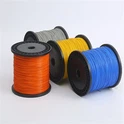
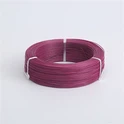
Yo, folks! As a supplier of UL10308 single core copper wire, I often get asked if this wire can be used in marine applications. It's a super important question, especially considering the harsh conditions out at sea. So, let's dig into this topic and find out if our UL10308 single core copper wire is a good fit for marine use.


First off, let's talk about what UL10308 single core copper wire is. It's a type of wire that's made with a single copper core. Copper is a great conductor of electricity, which means it can carry electrical current efficiently. The UL10308 part refers to the wire's compliance with certain safety and performance standards set by Underwriters Laboratories (UL). These standards ensure that the wire meets specific requirements for things like voltage rating, temperature resistance, and insulation quality.
Now, when it comes to marine applications, there are a few key factors we need to consider. The marine environment is a tough one. There's saltwater, which is highly corrosive. Saltwater can eat away at the wire's insulation and the copper core over time, leading to electrical problems and potentially dangerous situations. There's also humidity, which can cause moisture to build up inside the wire and lead to short circuits. And then there are the vibrations and mechanical stresses that come with being on a moving vessel.
So, can UL10308 single core copper wire handle all of this? Well, it depends. The copper core of the UL10308 wire is pretty resistant to corrosion on its own. Copper forms a thin layer of oxide on its surface when exposed to air, which helps protect it from further corrosion. However, in a marine environment, the saltwater can break down this oxide layer and start attacking the copper. That's why it's important to have good insulation on the wire.
The insulation on UL10308 single core copper wire is designed to provide a barrier between the copper core and the outside environment. It helps protect the wire from moisture, chemicals, and mechanical damage. But not all insulation is created equal. In a marine setting, you need insulation that's specifically designed to withstand the harsh conditions. Some types of insulation are more resistant to saltwater and humidity than others.
If the UL10308 wire has insulation that's rated for marine use, then it has a better chance of holding up in a marine application. Look for insulation that's labeled as "marine-grade" or "saltwater-resistant." This type of insulation is typically made from materials like cross-linked polyethylene (XLPE) or polyvinyl chloride (PVC) that have been formulated to resist the effects of saltwater and humidity.
Another thing to consider is the wire's installation. Proper installation is crucial in a marine environment. The wire should be installed in a way that protects it from physical damage, such as being pinched or cut. It should also be routed away from areas where it might come into contact with saltwater or other corrosive substances. Using cable glands and conduit can help protect the wire and keep it in good condition.
Now, let's compare UL10308 single core copper wire with some other types of single core copper wires that are commonly used in marine applications. For example, UL10316 Single Core Copper Wire might have different insulation properties or a different voltage rating. It's important to choose the right wire for your specific application. You might also want to look at UL10584 Single Core Copper Wire or UL10358 Single Core Copper Wire, which could offer different features and benefits.
In some cases, you might find that UL10308 single core copper wire is a great choice for certain marine applications. For example, if you're using it in a relatively dry area of the vessel where it won't be exposed to a lot of saltwater or moisture, it could work just fine. But if you're installing it in an area that's prone to flooding or high humidity, you might want to consider a wire with more robust insulation.
One of the advantages of using UL10308 single core copper wire in a marine application is its flexibility. Copper is a very malleable metal, which means the wire can be bent and shaped easily. This makes it easier to install in tight spaces on a vessel. And because it's a single core wire, it's less likely to experience problems with strand breakage or signal interference compared to multi-core wires.
However, there are also some potential drawbacks. As I mentioned earlier, the corrosion risk is a big concern. If the wire isn't properly protected, it could start to degrade over time and cause electrical problems. And if the insulation isn't up to the task, it could fail and lead to safety issues.
So, what's the bottom line? Can UL10308 single core copper wire be used in marine applications? The answer is maybe. It depends on the specific conditions of the application and how well the wire is protected. If you're considering using UL10308 single core copper wire in a marine setting, I recommend consulting with a professional electrician or marine engineer. They can help you assess the risks and determine if this wire is the right choice for your project.
If you're in the market for UL10308 single core copper wire or any of the other single core copper wires I mentioned, feel free to reach out. I'm here to help you find the best wire for your needs. Whether it's for a marine application or something else, I can provide you with high-quality products and expert advice. Let's have a chat and see how we can work together to get your project up and running.
References
- Underwriters Laboratories (UL) Standards for Electrical Wires
- Marine Electrical Installation Guidelines
- Technical Specifications for UL10308, UL10316, UL10584, and UL10358 Single Core Copper Wires