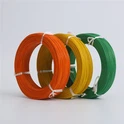
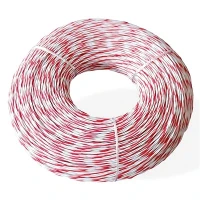
As a supplier of UL1332 tin plated FEP insulated wire, I get asked all the time: "Why does the quality of the tin plating matter so much for this specific wire?" If you work in aerospace, industrial automation, consumer electronics, or any field that relies on high-performance wiring, you've likely encountered UL1332 wire before. It's a workhorse for applications that need extreme temperature resistance, chemical stability, and reliable electrical conductivity-and the tin plating on its copper core is far more than just a cosmetic finish. It's a critical component that shapes how the entire wire performs under real-world stress. Today, I want to break down exactly how tin plating quality impacts UL1332 wire performance, why our team at AB (I can't speak for every supplier here) prioritizes every detail of that plating process, and what you should look for when specifying this wire for your projects.
First, let's ground this in what UL1332 tin plated FEP insulated wire actually is, for anyone new to the space. The "UL1332" designation comes from Underwriters Laboratories, which sets strict safety and performance standards for wiring used in commercial and industrial applications. The wire has two core layers: a stranded copper conductor, plated with a thin layer of tin, and an outer insulation of FEP (fluorinated ethylene propylene), a high-performance plastic known for its ability to withstand temperatures from -200°C to 200°C, resist corrosion, and stay intact in harsh chemical or UV-exposed environments. If you want to dive deeper into FEP's unique properties, our section on FEP Wire has a detailed breakdown of why this material is non-negotiable for demanding use cases-far more resilient than PVC or other standard insulations in high-heat settings.
Now, the tin plating: it's not just a thin coat of metal applied to the copper. The quality of this plating-its thickness, uniformity, adhesion, and purity-directly impacts three of the most critical functions of UL1332 wire: electrical conductivity, corrosion resistance, and solderability. Let's start with conductivity, because that's the entire point of a wire. Copper is an excellent conductor, but it's prone to oxidizing when exposed to air or moisture. Even a tiny layer of copper oxide increases electrical resistance, which can lead to power loss, overheating, or inconsistent performance over time. A good tin plating acts as a barrier between the copper and the environment, preventing that oxidation. But here's the catch: if the plating is uneven or too thin (less than 0.02 millimeters, per UL's minimum requirements for tin plated copper conductors), it won't cover all the tiny gaps between individual copper strands. Those gaps are where oxidation starts first, right where the conductor is most likely to flex or experience vibration. Over time, that oxidation builds up, raises resistance, and can even lead to conductor failure. For applications like avionics wiring, where a single voltage drop can disrupt critical systems, this isn't a minor issue-it's a safety risk. That's why we test every spool of our UL1332 wire for plating uniformity using eddy current testing, a process that measures plating thickness across every inch of the conductor, even in the tightest bends.


Next up, corrosion resistance. UL1332 wire is often used in harsh environments: industrial machinery in chemical plants, outdoor control panels exposed to humidity and salt spray, and even components in electric vehicles that sit near road salt or engine heat. Tin itself is corrosion-resistant, but only if the plating is free of defects like pinholes, cracks, or poor adhesion. A pinhole in the tin plating exposes the underlying copper to moisture or corrosive chemicals, creating a galvanic cell between copper and tin that accelerates corrosion way faster than copper would on its own. We've seen this happen with cheap, untested tin plated wires: a customer installed a competitor's UL1332 wire in a chemical processing plant, and within two years, the plating had developed thousands of pinholes, leading to complete conductor breakage at connection points. Our wire, by contrast, uses a double-layer tin plating process-first a thin strike layer to ensure adhesion to copper, then a thicker, top layer (0.03 mm, above UL's minimum) that's baked at 150°C to eliminate micro-cracks. This process means our tin plating doesn't just sit on the surface; it bonds to the copper, so even when the wire is bent repeatedly during installation, the plating doesn't flake or crack. For applications that need extra protection, our team also offers UL1332 wire with additional coating for extreme conditions-you can see our line of Tinned Electrical Wire for specialized corrosion-resistant configurations, built for industries where reliability can't be an afterthought.
The third big performance factor impacted by tin plating quality is solderability. If you've ever wired a device, you know that good solder joints depend on the metal surface being clean and able to take solder quickly. Tin is the easiest metal to solder, but only when it's pure and free of oxidation from the plating process. Poor tin plating-especially if it's contaminated with oils, sulfides, or has been left exposed to air for too long after plating-develops a thin layer of tin oxide that prevents solder from bonding properly. A bad solder joint doesn't just look messy; it has high resistance, can break under vibration, and is a common cause of field failures. For UL1332 wire, which is often used in assemblies that require multiple soldered connections (like control modules or motor windings), consistent solderability is non-negotiable. We bake our wire immediately after plating to "passivate" the tin surface, forming a stable, solder-friendly finish that stays intact for up to two years after production (longer than most competitors' wires, which can lose solderability in as little as six months if stored improperly). We also test every batch for solderability per UL standard 810, which means our wire joints pass the 200°C solder immersion test without any lifting or un-wetted areas. That's a big deal for our customers who build large-scale systems: less rework, fewer field failures, and faster production times.
But it's not just electrical and mechanical performance that ties to tin plating quality. The tin layer also affects how the FEP insulation adheres to the conductor, which is a key part of UL1332's mechanical strength. FEP is a tough insulation, but if the tin plating has poor adhesion to copper, the insulation can slip or separate from the conductor when the wire is bent, pulled, or exposed to thermal cycling. Thermal cycling is a huge stress for wires that experience temperature fluctuations-like automotive wiring, where engine heat can reach 150°C and drop to sub-zero temperatures in winter. We test our UL1332 wire for thermal cycling by exposing it to temperatures from -40°C to 200°C for 1,000 cycles, and during each test, the insulation and plating remain bonded perfectly. Competitors with lower-quality plating often see insulation delamination after just a few hundred cycles, leading to exposed conductors and short circuits. If you're working on projects that need long-term reliability in fluctuating temperatures, our Fire Resistant Wire line (which includes UL1332 configurations) is built to meet UL's vertical flame test standards, and the quality of our tin plating is a core reason that insulation stays secured even under extreme heat.
I also want to address a common misconception: thicker tin plating is always better. That's not true. Too-thick tin plating (over 0.06 mm) is brittle, and it can crack when the wire is bent around tight radii-something that happens all the time during installation. A 12 Awg stranded copper wire, for example, needs a plating thickness that balances protection and flexibility. Our team optimizes the plating thickness for every gauge, including the popular 12 Awg Stranded Copper Wire variant of UL1332, to ensure the plating is thick enough to prevent oxidation and corrosion, but thin enough to maintain flexibility. We tested this extensively: bending a spool of our 12 Awg wire around a 2-inch radius 1,000 times, and the plating showed zero cracks. A competitor's wire of the same gauge with overly thick plating cracked after just 100 bends. That's the kind of real-world performance that matters more than just numbers on a spec sheet.
Let's talk about real-world impact. Last year, a customer in the medical device industry contacted us because they were having issues with their UL1332 wire assemblies failing after 18 months of use. They had been using a cheaper supplier's wire, and the tin plating was so thin and uneven that oxidation had built up between the copper strands, leading to voltage drops in their patient monitoring systems. They switched to our UL1332 wire, and in the 12 months since, they've had zero failures-saving them an estimated $50,000 in rework and warranty claims. Another customer in the renewable energy space needed wire for solar panel connections that would be exposed to outdoor humidity and UV light. They were using a basic tin plated FEP wire that developed corrosion after two years. We recommended our UL1332 wire with our enhanced plating process, paired with our waterproof power cable accessories for complete moisture protection, and they've seen zero corrosion in the three years since installation.
So, as someone who's been supplying this wire for over a decade, what do I want you to take away? The next time you specify UL1332 tin plated FEP insulated wire, don't just look at the UL1332 wire. Dig into the plating specs: what's the minimum and average thickness? Is the plating uniform across the conductor, including between strands? Is the plating bonded to the copper, or just sitting on top? Does the supplier test for solderability, corrosion resistance, and flexibility? These details separate the wires that will work for your project from the ones that will cause headaches down the line.
If you're currently sourcing UL1332 wire and are dealing with performance issues, or if you need a custom configuration for your specific application, our team can help. We work with aerospace, medical, industrial, and automotive clients to engineer wiring that meets their exact requirements, with every step of the tin plating process controlled in-house to ensure consistent quality. We offer samples for testing, so you can compare our plating and performance against any other supplier's wire.
When you're ready to order or have questions about how our UL1332 wire can support your projects, our team is here to help. Let's connect and build a wiring solution that works for you.