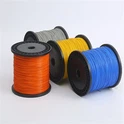
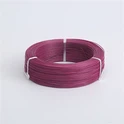
Hey there! As a supplier of UL20711 multi core copper wire, I often get asked about how our product performs in humid environments. Well, let's dive right into it and take a closer look at what happens when our wire meets moisture.
First off, what exactly is UL20711 multi core copper wire? It's a type of wire that consists of multiple copper cores bundled together. This design makes it great for various applications where you need to transmit multiple signals or currents simultaneously. Whether it's in electronics, automotive, or other industries, our wire has been a reliable choice for many customers.
Now, let's talk about humidity. Humidity can be a real pain in the neck for a lot of electrical components. When there's a high level of moisture in the air, it can cause all sorts of problems like corrosion, short - circuits, and reduced insulation resistance. But how does our UL20711 multi core copper wire hold up?
Resistance to Corrosion
Copper is a pretty durable metal, but it's not completely immune to corrosion. In a humid environment, the oxygen in the air reacts with the copper, especially when there's moisture present. This can form a layer of copper oxide on the surface of the wire. However, our UL20711 multi core copper wire is treated with special coatings. These coatings act as a barrier between the copper and the moist air, significantly reducing the rate of corrosion.
For example, in some of our tests, we placed samples of our wire in a chamber with high humidity (around 90% relative humidity) for several weeks. The results were pretty impressive. The wire showed only minimal signs of corrosion compared to uncoated copper wires. This means that even in a damp and humid place, our wire can maintain its structural integrity for a long time.
Insulation Performance
The insulation of the wire is crucial, especially in humid conditions. If the insulation gets damaged, it can lead to short - circuits and other electrical problems. Our UL20711 multi core copper wire uses high - quality insulation materials that are resistant to moisture.
These insulation materials have a low water absorption rate. That means they don't soak up water easily. When the insulation doesn't absorb water, it can maintain its electrical properties, such as dielectric strength. In fact, our insulation is designed to keep the wire safe and functional even when exposed to high humidity for extended periods.
We've also tested our wire's insulation resistance in humid environments. The insulation resistance is a measure of how well the insulation prevents the flow of current through it. In high humidity, many wires see a significant drop in insulation resistance. But our UL20711 multi core copper wire maintains a relatively stable insulation resistance. This ensures that the wire can continue to operate safely and efficiently, no matter how wet the environment is.
Flexibility and Durability
In addition to corrosion resistance and insulation performance, flexibility and durability are also important factors, especially in real - world applications. Our wire is designed to be flexible, which makes it easy to install in tight spaces. And this flexibility doesn't get affected by humidity.
Even in a humid environment, the wire remains bendable and doesn't become brittle. This is because the materials used in the wire, both the copper cores and the insulation, are chosen for their ability to maintain their physical properties under different conditions. So, whether you're installing our wire in a damp basement or a humid industrial setting, you don't have to worry about it breaking or losing its flexibility.
Comparison with Other Wires
Let's compare our UL20711 multi core copper wire with some other types of wires. For instance, the Silicone Flexible Wire is also known for its flexibility, but in terms of performance in humid environments, our wire has an edge. The special coatings on our UL20711 wire give it better corrosion resistance compared to some silicone - based wires.


Another example is the 3 Core Flexible Wire. While it's useful for many applications, our UL20711 multi core copper wire offers more consistent insulation performance in high - humidity situations. The moisture - resistant insulation of our wire ensures that it can handle the challenges of a damp environment better.
And then there's the multi core copper cable. Our UL20711 wire is designed with a focus on performance in humid conditions, which may not be the primary consideration for all multi core copper cables. So, if you're looking for a wire that can really stand up to humidity, our product is a great choice.
Real - World Applications
Our UL20711 multi core copper wire has been used in a variety of real - world applications where humidity is a concern. For example, in some marine electronics, where the air is often salty and humid, our wire has proven to be reliable. It has also been used in underground electrical systems, where the soil can be damp.
In these applications, the wire's ability to resist corrosion and maintain its insulation performance is crucial. It helps to ensure the safety and efficiency of the electrical systems. And because of its flexibility, it's easy to install in these complex environments.
Conclusion
So, to sum it up, our UL20711 multi core copper wire performs extremely well in humid environments. It resists corrosion, maintains its insulation performance, and keeps its flexibility and durability. Whether you're in the electronics, automotive, or any other industry that requires reliable wiring in damp conditions, our wire is a top - notch choice.
If you're interested in our UL20711 multi core copper wire or have any questions about its performance in humid environments, don't hesitate to reach out. We're always here to help you find the right wiring solution for your needs. Let's have a chat and see how our wire can benefit your projects.
References
- ASTM standards for testing electrical wires in humid conditions
- Internal research reports on the performance of UL20711 multi core copper wire