Hey there! As a supplier of UL1643 tin plated ETFE insulated wire, I often get asked about the cost. It's a question that doesn't have a one - size - fits - all answer, and in this blog, I'm gonna break down the factors that influence the price of this wire and give you a rough idea of what you might expect to pay.
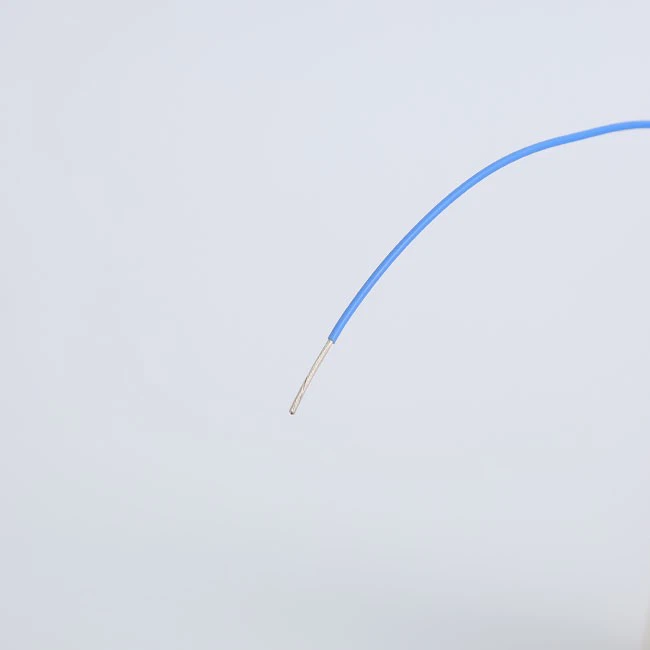
First off, let's talk about what UL1643 tin plated ETFE insulated wire is. UL1643 is a standard set by Underwriters Laboratories (UL), which is a well - known organization that tests and certifies products for safety. The tin plating on the wire provides good conductivity and corrosion resistance, while ETFE (Ethylene Tetrafluoroethylene) insulation is known for its excellent electrical properties, high temperature resistance, and chemical resistance. This makes UL1643 tin plated ETFE insulated wire suitable for a wide range of applications, from aerospace and military to industrial and automotive.
Factors Affecting the Cost
1. Raw Material Costs
The cost of raw materials is a major factor in determining the price of UL1643 tin plated ETFE insulated wire. The base metal for the wire, usually copper, can fluctuate in price depending on market conditions. Copper prices are affected by factors like global supply and demand, mining production, and geopolitical events. For example, if there's a shortage of copper due to mine closures in major producing countries, the price of copper will go up, and so will the cost of the wire.
The ETFE insulation material also adds to the cost. ETFE is a high - performance plastic, and its production process is complex. The cost of producing ETFE can be influenced by the price of its raw materials, energy costs during the manufacturing process, and the level of demand for ETFE in the market.
2. Manufacturing Process
The manufacturing process of UL1643 tin plated ETFE insulated wire is not simple. First, the copper wire needs to be drawn to the appropriate diameter. Then, it undergoes a tin - plating process, which requires specialized equipment and chemicals. After that, the ETFE insulation is applied to the wire, usually through an extrusion process. Each step in the manufacturing process adds to the cost.
For instance, the tin - plating process needs to be carefully controlled to ensure a uniform and high - quality coating. Any deviation in the plating thickness or quality can affect the performance of the wire, so manufacturers need to invest in quality control measures, which also increase the overall cost.
3. Wire Specifications
The specifications of the wire, such as its gauge (diameter), length, and temperature rating, can also impact the price. Thicker wires (lower gauge numbers) generally cost more than thinner wires because they require more raw material. Longer lengths of wire will obviously cost more than shorter ones.
Moreover, if the wire has a higher temperature rating, it means that the ETFE insulation needs to be formulated and processed to withstand those higher temperatures. This requires additional research and development, as well as more expensive manufacturing techniques, which will increase the price of the wire.
4. Quantity Ordered
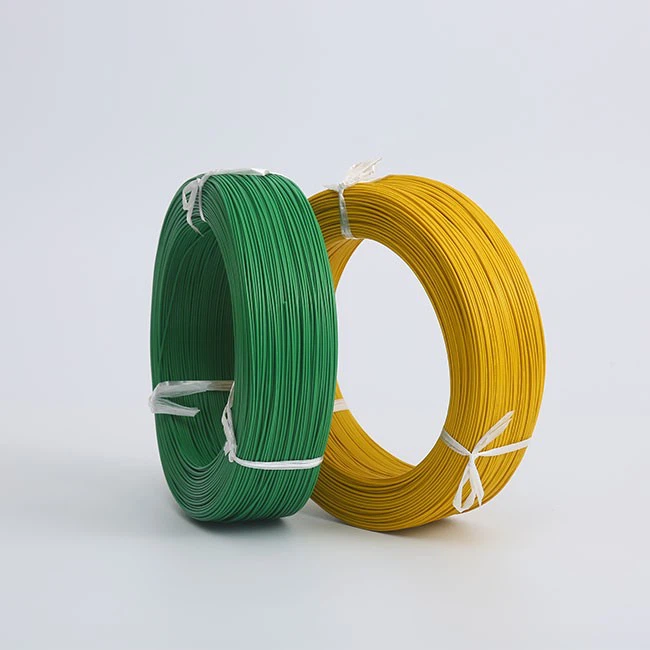
Just like with most products, the quantity of UL1643 tin plated ETFE insulated wire you order can have a significant impact on the cost per unit. If you order a large quantity, you can usually get a better price per foot or per meter. This is because manufacturers can achieve economies of scale in production. They can spread the fixed costs of production, such as setup costs for machinery and labor, over a larger number of units, reducing the cost per unit.
Price Range
So, how much does UL1643 tin plated ETFE insulated wire cost? Well, it's hard to give an exact figure because of the factors I mentioned above. However, I can give you a rough price range.
For small - quantity orders of common gauges (e.g., 22 - gauge or 24 - gauge) and standard lengths, you might expect to pay anywhere from $5 to $15 per foot. This is a relatively high price compared to some other types of electrical wire, but it's justified by the high - performance characteristics of UL1643 tin plated ETFE insulated wire.
If you're ordering in larger quantities, say 1000 feet or more, the price per foot can drop significantly, perhaps to around $2 to $8 per foot, depending on the specific specifications and market conditions.
Comparing with Other Wires
It's also useful to compare the cost of UL1643 tin plated ETFE insulated wire with other types of wires. For example, UL1516 High quality wire may have different price points. UL1516 wire has its own set of specifications and applications, and its cost can vary based on similar factors as UL1643 wire. In general, if UL1516 wire has different insulation requirements or a different manufacturing process, its price could be higher or lower than UL1643 wire.
Another wire to consider is UL10125 Teflon wire. Teflon is another high - performance insulation material, and the cost of UL10125 Teflon wire can be comparable to or higher than UL1643 tin plated ETFE insulated wire, depending on the specific requirements of the application.
Household Electrical Wire is much cheaper than UL1643 tin plated ETFE insulated wire. Household electrical wire is usually made with less expensive insulation materials and is designed for lower - performance applications, so its cost is a fraction of that of UL1643 wire.
Conclusion
In conclusion, the cost of UL1643 tin plated ETFE insulated wire is influenced by a variety of factors, including raw material costs, manufacturing processes, wire specifications, and quantity ordered. While it may seem expensive compared to some other types of wires, its high - performance characteristics make it a valuable choice for many critical applications.
If you're in the market for UL1643 tin plated ETFE insulated wire and want to get an accurate price quote, I'd be more than happy to help. Just reach out to me, and we can discuss your specific requirements. Whether you need a small quantity for a prototype or a large quantity for a production run, I can work with you to find the best solution at a competitive price.
References
- "Electrical Wire and Cable Handbook"
- Industry reports on copper and ETFE market trends