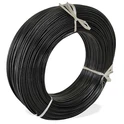
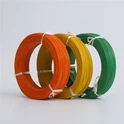
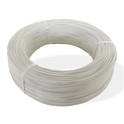
Hey there! As a supplier of UL1643 tin plated ETFE insulated wire, I've seen a lot of folks scratching their heads over how to tell if the wire they're getting is the real deal. So, I thought I'd share some tips on how to identify genuine UL1643 tin plated ETFE insulated wire.


First off, let's talk about what UL1643 tin plated ETFE insulated wire is. UL1643 is a standard set by Underwriters Laboratories (UL), which is a well - known organization for product safety testing and certification. This wire is made with a tin - plated conductor, which offers good conductivity and corrosion resistance. The ETFE (Ethylene Tetrafluoroethylene) insulation is known for its excellent chemical resistance, high - temperature tolerance, and mechanical strength.
Check the Certification
One of the most important things to look for is the UL certification. Genuine UL1643 tin plated ETFE insulated wire should have a UL mark on it. This mark is like a stamp of approval from UL, indicating that the wire has met all the safety and performance requirements of the UL1643 standard. You can verify the UL certification by going to the UL website and using their database to look up the product. Just enter the UL file number, which should be printed on the wire or its packaging. If the wire doesn't have a valid UL mark or if you can't find it in the UL database, it's probably not the real deal.
Examine the Conductor
The conductor of the UL1643 tin plated ETFE insulated wire should be properly tin - plated. A genuine tin - plated conductor will have a smooth, shiny surface. If you see any signs of rust, uneven plating, or a dull appearance, it could be a red flag. You can also use a magnifying glass to take a closer look at the conductor. The tin plating should be uniform, without any visible gaps or blisters. Another thing to check is the gauge of the conductor. The gauge should match the specifications stated on the product label. You can use a wire gauge tool to measure the diameter of the conductor and make sure it's within the acceptable range.
Inspect the Insulation
The ETFE insulation is another key aspect. Genuine ETFE insulation is tough and flexible. It should not crack or peel easily when you bend the wire. You can try gently bending the wire back and forth a few times. If the insulation shows signs of damage, such as cracking or flaking, it might not be genuine ETFE. Also, the color of the ETFE insulation should be consistent. Usually, it has a clear or semi - clear appearance, but it can also come in other colors. Any discoloration or uneven color could indicate a problem.
Test the Electrical Properties
If you have the equipment, you can perform some basic electrical tests on the wire. Measure the resistance of the conductor. The resistance should be within the range specified by the UL1643 standard. A significant deviation from the expected resistance could mean that the wire is not of good quality. You can also test the insulation resistance. High - quality ETFE insulation should have a high insulation resistance, which helps prevent electrical leakage.
Look at the Packaging and Labeling
The packaging and labeling of the wire can also give you some clues. Genuine UL1643 tin plated ETFE insulated wire usually comes in professional - looking packaging. The label should clearly state the product name, UL file number, gauge, length, and other important specifications. The printing on the label should be clear and legible. If the packaging looks shoddy or the label has misspellings or incomplete information, it's a sign that the wire might not be genuine.
Compare with Known Good Samples
If you have access to a known good sample of UL1643 tin plated ETFE insulated wire, you can compare the suspect wire with it. Look at the physical appearance, the feel of the insulation, and the performance of the conductor. Any significant differences could indicate that the suspect wire is not genuine.
Ask the Supplier
As a supplier myself, I know that a reliable supplier will be happy to answer your questions. If you're unsure about a particular wire, ask the supplier for more information. A genuine supplier should be able to provide you with the UL certification, test reports, and other documentation to prove the quality of their product. If the supplier is evasive or can't provide the necessary information, it's best to be cautious.
Now, I also want to mention some related products that might interest you. If you're looking for other high - quality wires, you can check out our UL1671 High quality wire. It also has great performance and meets strict standards. Our ETFE insulation wire is another option that offers excellent insulation properties. And if you need a wire with even higher performance, our UL10086 Teflon wire is a great choice.
If you're in the market for UL1643 tin plated ETFE insulated wire or any of our other products, don't hesitate to reach out. We're here to help you find the right wire for your needs. Whether you're working on a small DIY project or a large - scale industrial application, we have the expertise and the products to meet your requirements. Contact us for more details and let's start a great business relationship!
References
- Underwriters Laboratories (UL) Standards for Safety documentation on UL1643
- Technical manuals on wire manufacturing and testing
- Industry publications on electrical wiring and insulation materials