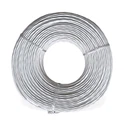
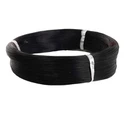
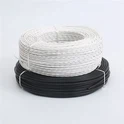
In the electrical industry, the safety of wiring is of paramount importance. One of the key concerns is the fire - resistance of the wires used in various applications. As a supplier of ETFE insulated wire, I often encounter questions from customers regarding the fire - resistant properties of our products. In this blog, I will delve into the topic of whether ETFE insulated wire is fire - resistant, exploring the science behind it and its real - world applications.
Understanding ETFE Insulated Wire
ETFE, or ethylene tetrafluoroethylene, is a fluoropolymer that has gained significant popularity in wire insulation. It is a copolymer of ethylene and tetrafluoroethylene, combining the best properties of both materials. ETFE insulated wires are known for their excellent chemical resistance, high mechanical strength, and good electrical insulation properties. They are widely used in industries such as aerospace, automotive, and electronics, where reliability and performance are crucial.
Fire - Resistance Properties of ETFE
To determine whether ETFE insulated wire is fire - resistant, we need to understand the concept of fire - resistance. Fire - resistant materials are those that can withstand exposure to fire or high temperatures without igniting easily or spreading flames rapidly.
ETFE has several characteristics that contribute to its fire - resistant nature. Firstly, ETFE has a relatively high melting point, typically around 260 - 270°C. This means that it can maintain its physical integrity at moderately high temperatures without melting and dripping, which is a common cause of fire spread.
Secondly, ETFE has a low flammability rating. When exposed to a flame, ETFE will not support combustion easily. It has a limited oxygen index (LOI) of around 30 - 35%. The LOI is a measure of the minimum concentration of oxygen in a mixture of oxygen and nitrogen that will support combustion. A higher LOI indicates better fire - resistant properties. With an LOI in this range, ETFE requires a relatively high concentration of oxygen to burn, making it less likely to ignite in normal atmospheric conditions.
In addition, when ETFE does burn, it produces very little smoke and toxic gases compared to many other polymers. This is a crucial factor in fire safety, as smoke inhalation is often the leading cause of death in fires. The low smoke and toxic gas emission of ETFE insulated wires can provide valuable time for evacuation and reduce the risk of harm to people in the vicinity of a fire.
Real - World Applications and Testing
The fire - resistant properties of ETFE insulated wires have been put to the test in various real - world applications. In the aerospace industry, for example, where safety is of the utmost importance, ETFE insulated wires are used extensively. They are required to meet strict fire safety standards, such as the Federal Aviation Regulations (FAR) and the European Aviation Safety Agency (EASA) regulations. These regulations specify the fire - resistance requirements for aircraft wiring, including limits on flammability, smoke emission, and toxic gas production. ETFE insulated wires have been proven to meet these stringent standards, demonstrating their reliability in high - risk environments.


In the automotive industry, ETFE insulated wires are also used in critical electrical systems. They need to withstand the high temperatures generated under the hood and in the engine compartment. The fire - resistant properties of ETFE ensure that these wires do not pose a significant fire hazard, even in the event of an electrical short - circuit or other malfunctions.
Comparing with Other Insulation Materials
To better understand the fire - resistant properties of ETFE insulated wire, it is useful to compare it with other common insulation materials. PVC (polyvinyl chloride) is one of the most widely used insulation materials. While PVC is relatively inexpensive and has good electrical insulation properties, it has a lower melting point and a higher flammability compared to ETFE. When PVC burns, it can release large amounts of toxic gases, such as hydrogen chloride, which can be extremely harmful to human health.
Silicone rubber is another popular insulation material. It has good flexibility and high - temperature resistance, but its fire - resistance is not as good as ETFE. Silicone rubber can burn more easily and may produce more smoke than ETFE.
Our Product Range
As a supplier of ETFE insulated wire, we offer a wide range of products to meet the diverse needs of our customers. Our flexible stranded wire is designed for applications where flexibility is required, such as in robotics and automation. The stranded construction provides excellent flexibility while maintaining good electrical conductivity.
Our 18awg kabel is a popular choice for many general - purpose electrical applications. It has a standard 18 - gauge size and is suitable for use in a variety of environments.
We also offer tin stranded wire, which is tin - plated for enhanced corrosion resistance. This type of wire is often used in outdoor or harsh - environment applications.
Conclusion
In conclusion, ETFE insulated wire is indeed fire - resistant. Its high melting point, low flammability, and low smoke and toxic gas emission make it a reliable choice for applications where fire safety is a concern. Whether in the aerospace, automotive, or electronics industries, ETFE insulated wires can provide the necessary protection against fire hazards.
If you are in need of high - quality, fire - resistant ETFE insulated wire, we are here to help. Our team of experts can provide you with detailed information about our products and assist you in selecting the right wire for your specific application. Contact us today to start a discussion about your procurement needs.
References
- ASTM International standards on fire - resistance testing of polymers.
- Federal Aviation Regulations (FAR) related to aircraft wiring fire safety.
- European Aviation Safety Agency (EASA) regulations on aircraft electrical systems.