Hey there! As a single core copper wire supplier, I often get asked about whether single core copper wire is affected by electromagnetic interference (EMI). It's a crucial question, especially for those in industries where signal integrity and electrical performance are top priorities. So, let's dive right in and explore this topic.
First off, let's understand what electromagnetic interference is. EMI is basically the disruption that occurs when an electromagnetic field from one source affects another electrical device or system. This can happen in various ways, like through radiation (when the interference travels through the air) or conduction (when it travels through a conductor like a wire).


Now, let's talk about single core copper wire. Copper is a great conductor of electricity, which is why it's so commonly used in electrical wiring. But when it comes to EMI, things can get a bit tricky. Single core copper wire, by its nature, is more susceptible to EMI compared to multi - core cables.
One of the main reasons for this is that single core copper wire doesn't have the built - in shielding or cancellation mechanisms that multi - core cables often have. In a multi - core cable, the different cores can be arranged in such a way that the electromagnetic fields generated by the currents in each core can cancel each other out to some extent. But in a single core wire, there's no such cancellation.
Let's take a look at some real - world scenarios. In an industrial setting, there are often a lot of electrical equipment and machinery running simultaneously. These machines can generate strong electromagnetic fields. If you're using single core copper wire in this environment, it's very likely that the wire will pick up some of this interference. This can lead to all sorts of problems, like signal distortion, reduced performance of electrical devices, or even complete system failures in extreme cases.
For example, if you're using single core copper wire to transmit data signals, the EMI can cause errors in the data. This is a big deal in industries where accurate data transmission is critical, like telecommunications or automation.
However, it's not all doom and gloom. There are ways to mitigate the effects of EMI on single core copper wire. One of the most common methods is to use shielding. You can add a metallic shield around the single core copper wire. This shield acts as a barrier, preventing the external electromagnetic fields from reaching the wire. The shield is usually grounded, which helps to dissipate the interfering energy.
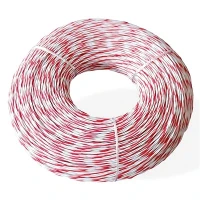
Another option is to use twisted pair configurations. Although single core copper wire is, well, single - core, you can still twist multiple single core wires together. This twisting helps to reduce the effects of EMI by creating a balanced circuit. The electromagnetic fields induced in each wire of the twisted pair tend to cancel each other out.
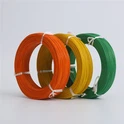
Now, let me introduce some of the single core copper wire products we offer. We have the high voltage flexible cable. This cable is designed to handle high voltages while still maintaining flexibility. It's a great choice for applications where you need to transmit power over long distances or in areas where space is limited.
We also have the UL10584 single core wire. This wire meets the UL10584 standard, which means it has been tested and approved for specific electrical and safety requirements. It's suitable for a wide range of applications, from general wiring in buildings to more specialized industrial uses.
And then there's our unsheathed copper wire. This wire is ideal for applications where you need a bare copper conductor, like in some electrical grounding systems or for custom - made electrical connections.
So, to sum it up, single core copper wire is indeed affected by electromagnetic interference. But with the right precautions and the use of appropriate products, you can minimize these effects and ensure reliable electrical performance.
If you're in the market for single core copper wire, whether it's for a small DIY project or a large - scale industrial application, I'd love to have a chat with you. We can discuss your specific needs, and I can help you choose the right product to meet them. Don't hesitate to reach out and start a conversation about your procurement requirements.
References
- "Electromagnetic Compatibility Engineering" by Henry W. Ott
- "Handbook of Electrical Engineering" for general electrical principles and wire characteristics.