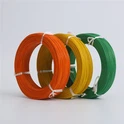
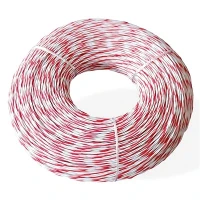
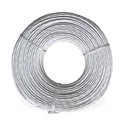
In the past few years of working on high-temperature insulated wires, among the most frequently asked questions by customers, "Is PFA insulated wire wear-resistant?" is definitely among the top three, especially for those who work in automation and metallurgy. They always worry that the wires cannot withstand frequent friction and dragging, as changing the wires not only costs money, but also causes headaches due to downtime losses. Today, based on my usual experience and actual test data, I will talk to you about the wear resistance of PFA insulated wire.
First, let me tell you what is the wear resistance of wires? In fact, it's similar to the shoes we wear-the soles are durable and can last for two to three years; If it is not wear-resistant, it may wear out the sole of the shoe after walking for a few months, revealing the insole inside. The wear resistance of a wire is essentially the PFA insulation layer on its outer layer, which can withstand friction, scratching, dragging, and repeated bending losses.
Some people may say, isn't it just a matter of grinding? How much impact can it have? I have seen too many cases of problems caused by insulation layer abrasion. Previously, there was a customer who worked on an automated production line. At first, they used ordinary insulated wires at a low cost. In less than half a year, the wires were repeatedly dragged and rubbed by a robotic arm, causing the insulation layer to abrasion and expose the conductor, directly leading to equipment short circuits and losses of tens of thousands of yuan in a day of shutdown. So for wires, wear resistance is not just a matter of "using them for a long time", but also the key to maintaining the safety bottom line.
There is also a specialized testing method in the industry called Taber abrasion resistance test. Simply put, under fixed pressure, the insulation layer is repeatedly rubbed with a grinding wheel to see how many times it can be rubbed before being worn through. The more times it is rubbed, the better the abrasion resistance performance.
Speaking of which, some people may wonder why PFA insulated electric wire is so concerned about wear resistance? Because PFA itself is not an ordinary wire, its strengths are high temperature resistance and corrosion resistance, specifically used in the most "demanding" scenarios, which all rely on friction.
For example, in the heat treatment furnace of a metallurgical plant, the temperature measurement line inside is exposed to a high temperature environment of over 250 ℃ for a long time, and it has to repeatedly rub against the metal and high-temperature resistant components of the furnace body; There are also robots on automated production lines, with their arms swinging back and forth, and the wiring harnesses on them being dragged and bent every day, causing countless frictions throughout the day; Even outdoor photovoltaic power plants require wires to withstand wind, sand, friction, and ultraviolet radiation. If the wear resistance is not good, problems will arise soon after use.
And the unit price of PFA wires is not low. If the wear resistance is not good, it will have to be replaced after a year or so, which is even more expensive. I have calculated an account for the customer, which shows that a highly wear-resistant PFA wire can last for 5-10 years, while ordinary wear-resistant wires may be scrapped in 1-2 years. Including the labor and downtime losses of wire replacement, the highly wear-resistant wire is actually more cost-effective and worry free.


However, one thing to note is that not all PFA insulated electric wire is equally wear-resistant. I have seen many products that appear to be the same, but in reality, there is a significant difference in wear resistance. The key to this lies in a few details. Firstly, the raw materials are the most fundamental. Pure PFA itself has excellent wear resistance, even better than PTFE that we often hear about, with a particularly low wear rate. But some manufacturers, in order to lower costs, may add other materials to PFA or use raw materials with insufficient purity, which will greatly reduce the wear resistance. Then there is the craftsmanship, which many customers tend to overlook. PFA insulation layer is melt extruded. If the temperature and speed are not well controlled, the molecular arrangement of the insulation layer will be uneven, and the surface will not be smooth, which is prone to wear during friction.
There is also a conductor structure, where multiple stranded conductors are more resistant to bending and fatigue than single stranded conductors. Stress concentration does not occur during friction, and it can indirectly protect the insulation layer. For example, the UL10503 series we produce uses multi stranded copper wire plated with tin or silver. Customers have reported that when used on robot drag chains, the insulation layer will not crack or wear out even after being bent thousands of times.
Of course, the usage environment is also crucial. The same PFA wire has a different wear life in outdoor environments with more sand and gravel compared to in clean control cabinets; If the wires are directly attached to sharp metal edges during installation, even if they are wear-resistant, they are easily scratched.
After discussing the factors affecting wear resistance, let me tell you where high wear resistant PFA insulated electric wire is usually used. It can be applied in the metallurgical and heat treatment industries, such as temperature measuring wires in furnaces and internal wiring of heating equipment. After repeated friction at high temperatures for a long time, ordinary wires will age and break in just a few months. PFA wires can work in environments above 250 ℃ for a long time, are wear-resistant and heat-resistant. There are also reaction vessels and electroplating lines in the chemical industry, which not only have friction but also acid and alkali corrosion. PFA wires can withstand both friction and corrosion.
The fields of automation and robotics are not to mention, such as drag chain cables, which are dragged and bent every day and have requirements for wear resistance and flexibility. High wear PFA wires can just meet these requirements. I have contacted a customer who specializes in robot component processing and used our UL10362 flexible model. The robot worked continuously for two years without any wear problems on the wiring harness.
There are also outdoor new energy projects, such as photovoltaics and wind power. The wires need to withstand wind, sand, ultraviolet radiation, high and low temperatures, and have poor wear resistance, which can easily lead to insulation damage. In addition, high-end fields such as medical equipment and aerospace have higher requirements for wires, which not only require wear resistance, but also lightweight and high insulation. PFA wires are also the preferred choice.
To sum up, PFA insulated wire is inherently wear-resistant and much stronger than ordinary insulated wires. With good raw materials, processes, and structural design, their wear resistance can be further upgraded to withstand the most demanding friction scenarios.