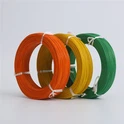
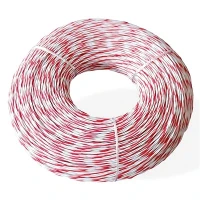
As a supplier of UL1516 tin plated ETFE insulated wire, I've delved deep into the properties and behaviors of our products. One of the most critical aspects that often concerns our customers is the aging mechanism of the ETFE insulation in UL1516 wire. Understanding this mechanism is essential for ensuring the long term reliability and performance of our wires in various applications.
UL1516 tin plated ETFE insulated wire is widely used in many electrical and electronic systems. The tin plating on the conductor provides excellent corrosion resistance, while the ETFE (Ethylene Tetrafluoroethylene) insulation offers high-temperature resistance, chemical resistance, and good electrical insulation properties. These features make it suitable for a range of applications, from aerospace and automotive to household electrical systems.
ETFE is a fluoropolymer, which is a type of polymer that contains fluorine atoms in its chemical structure. This unique structure gives ETFE several remarkable properties. It has a high melting point, typically around 260°C, and can withstand continuous use at temperatures up to 180°C. It also has excellent resistance to most chemicals, including acids, alkalis, and solvents.
In terms of electrical properties, ETFE has a low dielectric constant and low dissipation factor, which means it can maintain stable electrical performance even at high frequencies. This makes it an ideal choice for applications where signal integrity is crucial.
Aging Mechanisms of ETFE Insulation
Thermal Aging
One of the primary aging mechanisms of ETFE insulation is thermal aging. When the wire is in use, the current flowing through the conductor generates heat. If the heat dissipation is not sufficient, the temperature of the insulation can rise significantly.
At high temperatures, the molecular chains of ETFE can start to break down. The carbon fluorine bonds in the ETFE structure are relatively stable, but prolonged exposure to high temperatures can cause some of these bonds to rupture. This leads to a reduction in the molecular weight of the polymer and a change in its physical properties.
As the molecular weight decreases, the mechanical strength of the insulation can decline. The insulation may become more brittle, which increases the risk of cracking and damage. Cracks in the insulation can expose the conductor, leading to short circuits and other electrical failures.
Oxidative Aging
Oxidative aging also plays a significant role in the degradation of ETFE insulation. Oxygen in the air can react with the ETFE polymer at elevated temperatures. The reaction can start at the surface of the insulation and gradually penetrate deeper into the material.
The oxidation process involves the formation of free radicals in the polymer chains. These free radicals can react with other molecules in the polymer or with oxygen, leading to the formation of new chemical species such as carbonyl groups. The presence of these new functional groups can change the physical and chemical properties of the insulation.
For example, the formation of carbonyl groups can make the insulation more hydrophilic, which means it can absorb more moisture. Moisture absorption can further accelerate the aging process and also affect the electrical insulation properties of the wire.
Environmental Stress Cracking
Environmental stress cracking (ESC) is another important aging mechanism for ETFE insulation. ESC occurs when the insulation is exposed to certain chemicals or solvents while under stress. The stress can be mechanical stress, such as bending or stretching of the wire, or internal stress due to thermal expansion and contraction.
Some chemicals, even those that are generally considered to have a low reactivity with ETFE, can weaken the polymer structure at the molecular level. When the insulation is under stress, these weakened areas can develop cracks. Once a crack starts, it can propagate rapidly, especially if the wire is subjected to further stress or environmental exposure.
Impact of Aging on UL1516 Wire Performance
Electrical Performance
As the ETFE insulation ages, its electrical properties can change significantly. The increase in moisture absorption due to oxidative aging can lead to a decrease in the dielectric strength of the insulation. This means that the insulation is more likely to break down under an electrical voltage, increasing the risk of electrical leakage and short circuits.
The change in the molecular structure of the insulation can also affect its capacitance and impedance. These changes can have a negative impact on the signal transmission in applications where the wire is used for high frequency signal transfer, such as in communication systems.
Mechanical Performance
The degradation of the mechanical properties of the ETFE insulation due to aging is a major concern. The loss of flexibility and the increase in brittleness make the wire more prone to damage during installation and handling. Cracks in the insulation can also allow moisture and contaminants to reach the conductor, which can cause corrosion of the tin plating and the conductor itself.
Mitigating the Aging Effects
Temperature Management
Proper temperature management is crucial for reducing the rate of thermal aging. This can involve using heat dissipating materials in the wiring system, ensuring adequate ventilation, and selecting the appropriate wire size to limit the current density and thus the heat generation.
Antioxidants and Stabilizers
Adding antioxidants and stabilizers to the ETFE insulation during the manufacturing process can help to slow down the oxidative aging process. These additives can react with free radicals and prevent them from causing further damage to the polymer chains.
Stress Relief
To prevent environmental stress cracking, it is important to minimize the stress on the wire during installation. This can be achieved by using proper bending radii, avoiding sharp corners, and providing sufficient slack in the wiring to accommodate thermal expansion and contraction.
Our Products and Solutions
As a supplier of UL1516 tin plated ETFE insulated wire, we are committed to providing high quality products with excellent long term performance. Our manufacturing process incorporates advanced techniques to enhance the aging resistance of the ETFE insulation.
We use high purity raw materials and carefully control the extrusion process to ensure a uniform and defect free insulation layer. We also add carefully selected antioxidants and stabilizers to the insulation to improve its resistance to oxidative aging.
In addition, we offer Silver Coated Wire for applications where even higher conductivity and corrosion resistance are required. Our Household Electrical Wire is designed to meet the specific safety and performance requirements of household electrical systems.
Conclusion
Understanding the aging mechanism of the ETFE insulation in UL1516 wire is essential for ensuring the reliability and performance of the wire in various applications. By being aware of the factors that contribute to aging, such as thermal aging, oxidative aging, and environmental stress cracking, we can take appropriate measures to mitigate these effects.
As a supplier, we are dedicated to continuous improvement in our manufacturing processes and product quality. If you are in need of high quality UL1516 tin plated ETFE insulated wire or have any questions about our products, please feel free to contact us for procurement and further discussion.