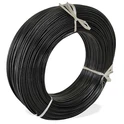
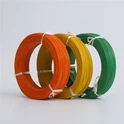
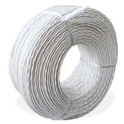
In the field of electrical wiring, the aging resistance of a wire is a crucial factor that determines its long - term performance and reliability. As a supplier of UL1670 tin plated ETFE insulated Electrical Wires, I'm often asked about the aging resistance of this particular product. In this article, I will delve into the details of what aging resistance means for UL1670 tin plated ETFE insulated Electrical Wires, its importance, and the factors that influence it.
Understanding Aging Resistance in Electrical Wires
Aging resistance refers to a wire's ability to maintain its physical and electrical properties over an extended period of time, even when exposed to various environmental and operational stresses. These stresses can include temperature fluctuations, humidity, chemical exposure, mechanical stress, and electrical stress. For electrical wires like the UL1670 tin plated ETFE insulated Electrical Wires, maintaining good aging resistance is essential because it ensures that the wire functions safely and effectively throughout its service life.
When a wire ages, several things can happen. Its insulation may become brittle, crack, or lose its dielectric strength. The conductor can corrode, leading to increased resistance and potential overheating. All of these issues can compromise the safety and performance of the electrical system, potentially leading to malfunctions, short circuits, or even fires.
Why is UL1670 not afraid of aging? These three points are crucial
The aging of wires is mainly afraid of three things: heat, oxygen, and light. Just like our skin, it wrinkles when exposed to too much sun and dries out when exposed to too much wind. But the reason why UL1670 can maintain its "youthfulness" is mainly due to the following deadly skills:
1. Chemical inertness of ETFE materials
ETFE insulation layer is a very stable material. In layman's terms, it 'doesn't like to interact with people'. Whether it's oxygen in the air or acid-base oil pollution in industrial environments, ETFE hardly reacts chemically with them.
- Comparison : Ordinary polyvinyl chloride (PVC) wires will become brittle over time due to the volatilization of plasticizers. But ETFE has a stable internal structure, and even after ten or eight years, it remains resilient.
2. Long term temperature resistance level of 125 ℃
The rated temperature of UL1670 is usually 125 ° C. This means that it can maintain stable electrical performance even at high temperatures of 125 ° C.
- Practical significance : In our daily lives, it is difficult for wires to remain at such high temperatures all the time. This creates an advantage of 'reduced usage'. When a wire that can withstand 125 ° C works at room temperature (such as 25-40 ° C), its aging rate will be astonishingly slow. It's like a person who can run a marathon, if you let him take a walk every day, he will definitely be able to walk very easily and for a long time.
3. Anti corrosion shield of tin plating process
Many wires age not because the insulation skin is rotten, but because the copper wires inside have oxidized and turned into blackened "scrap copper". UL1670 uses tin plated copper.
- Principle : Plating a thin layer of tin on the surface of copper wire is like applying a layer of anti rust paint to the copper wire. Even in humid, salt spray, or heavy industrial exhaust environments, the tin layer can protect the copper wire from oxidation, ensuring the service life of the entire wire.
The Significance of Aging Resistance for UL1670 Tin Plated ETFE Insulated Wire
In practical industrial applications, the quality of aging resistance directly affects the core interests of the following three aspects:
1. Prevent the explosion of "hidden costs"
Many purchasing friends often only look at the initial purchase price when selecting. But if the aging resistance of the wire is poor, the real cost will explode in 2-3 years:
- Shutdown loss : A short circuit caused by aging and cracking of a wire may result in the shutdown of the entire production line worth millions.
- Difficulty in troubleshooting : The wiring inside the cabinet is densely packed, and finding that aging "breakpoint" is extremely time-consuming and labor-intensive.
- Brand reputation : If your product is sold to customers and malfunctions due to aging wiring within two years, the damage to the brand cannot be measured in monetary terms.
- The value of UL1670 : Through the strong combination of tin plated copper and ETFE, it greatly extends the maintenance cycle. This "long life" attribute is essentially helping you save money.
2. The 'last line of defense' under extreme working conditions
UL1670 often appears in medical equipment, aviation electronics, or automated robotic arms. These scenes have one thing in common: harsh environment and limited space.
- Heat accumulation : In a compact chassis, heat dissipation is often a major issue. Ordinary wires will quickly lose water and become brittle under long-term hot baking.
- Physical fatigue : If it is a moving part, the aging insulation layer of the wire will become hard, followed by frequent bending and cracking.
- The importance of aging resistance : Only materials like ETFE with excellent fatigue resistance and heat aging resistance can ensure that wires remain flexible under high temperatures and repeated movements, without leaving any safety hazards.
3. Dealing with complex chemical "erosion"
In industrial sites, the air may be filled with oil mist, acidic gases, or cleaning agents. The process of aging is often accompanied by chemical degradation.
- If the insulation layer is not resistant to aging, chemicals will penetrate and directly corrode the copper core inside.
- Advantages of UL1670 : The ETFE insulation layer is like a "chemical shield", and its aging resistance ensures that even in chemically challenging environments, the internal conductors are perfectly wrapped.
The Role of ETFE Insulation in Aging Resistance
If the conductor is the "heart" of the wire, then the ETFE insulation layer is its "skin". This layer of skin can resist aging mainly because of its unique molecular genes:
1. Locking chemical bonds: a natural "golden bell shield"
The molecular structure of ETFE contains extremely stable fluorocarbon bonds (C-F bonds). This chemical bond is one of the strongest covalent bonds in nature, with very high energy.
- Anti aging principle : the so-called aging is essentially that light, heat or chemical substances "break" the molecular bonds of materials. But due to the exceptionally strong molecular bonds of ETFE, the energy of ultraviolet radiation or acidic or alkaline substances in the environment cannot shake it at all.
- In plain language : Other material molecules are like a loose bundle of firewood that disperses with the wind; The molecules of ETFE are like welded steel mesh, indestructible.
2. Refuse thermal degradation: the 'calmer' under high temperatures
Ordinary insulation materials (such as PVC or PE) will undergo "thermal degradation" under long-term high temperature, becoming viscous, blackened, or dry and peeling.
- The function of ETFE : It can not only withstand instantaneous high temperatures up to 150 ° C (UL1670 standard is set at 125 ° C to ensure sufficient safety margin), but more importantly, its molecular chains will not break or crosslink during long-term heating.
- Anti aging performance : Even if the wires have been working in the lamp cabinet, engine compartment and other high temperature areas for several years, ETFE can still maintain the initial mechanical strength and elasticity, and will not enter the old age in advance due to "excessive heating".
3. Low permeability: blocks "internal and external pincer attacks"
Many wire aging starts from the inside, such as moisture and corrosive gases from the environment penetrating into the insulation layer, corroding copper wires.
- The function of ETFE : The molecular arrangement of ETFE material is very dense, and its water absorption rate is almost zero. It is like a dense ceramic layer, blocking out all external oxygen, moisture, and industrial solvents.
- Anti aging performance : this means that it can protect the inner tinned copper wire from oxidation. Both inside and outside are well protected, and the lifespan of the entire wire naturally doubles.
4. Excellent weather resistance: not afraid of "sun and rain"
In outdoor or environments with ultraviolet light exposure, the insulation layer is prone to photo oxidative aging and cracking.
- The function of ETFE : ETFE material itself is almost transparent to ultraviolet light, and it does not absorb the energy of ultraviolet light, so it will not be damaged by ultraviolet light.
- Anti aging performance : after decades of outdoor exposure experiments, the physical properties of ETFE have almost not declined. This means that even if UL1670 wires are occasionally exposed to sunlight, there is no need to worry about them becoming brittle like ordinary plastic.
The Impact of Tin Plating on Aging Resistance
Why bother plating a layer of tin on the surface of copper wire? This is not just to look good. It has three "hard core" logic in anti-aging:
1. Thoroughly cut off the "oxidation chain"
Although copper has excellent conductivity, it has a fatal weakness: it loves to eat oxygen.
- Ordinary bare copper : When exposed to air, especially in humid environments, it quickly forms a layer of black copper oxide. This type of oxide not only has high resistance, but also spreads deep into the wire core along the gaps.
- The function of tin plated copper : Tin has much more stable chemical properties than copper. Plating a uniform layer of tin on the surface of copper wire is like applying a layer of "sealant" to completely isolate copper from contact with oxygen and moisture.
- Anti aging performance : even after ten or eight years of use, you peel off the skin of the UL1670, the conductor inside is still as bright as new, and the conductivity is almost zero attenuation.
2. Inhibit "electrochemical corrosion"
In industrial sites, wires are inevitably exposed to acidic or alkaline water vapor. If bare copper wire is used at this time, the combination of current and chemical substances will cause serious electrochemical reactions, resulting in the copper wire becoming brittle or even breaking.
- The function of tin plating : The tin layer has excellent corrosion resistance. It is like a 'sacrificial defense line', which can prioritize protecting the internal copper core from corrosion even if trace amounts of corrosive substances penetrate.
- Anti aging performance : in salt fog environment (such as seaside equipment) or industrial acid fog environment, the service life of tinned conductor is usually several times that of ordinary bare copper.
3. Solve the problem of "contact aging"
Where is the most prone place for wire aging to malfunction? At the joint!
Bare copper wire is prone to poor contact and heat generation at the joint due to oxidation. Heating will further accelerate the aging of the insulation layer, forming a vicious cycle.
- The function of tin plating : The tin layer not only resists oxidation, but also has excellent solderability. Whether you are crimping or soldering, the tin layer can provide an extremely stable contact surface, preventing the overall circuit from "premature aging" caused by joint oxidation and heat generation.


"ETFE outer coat"+"tin plated inner core": perfect anti-aging combination
Why does UL1670 combine these two things together? There is a logic of strong collaboration here:
Internal and external repair : ETFE blocks most of the external attacks (high temperature, chemical, ultraviolet), while the tin plating layer solves the internal oxidation hazard.
Preventing 'cross infection' : At high temperatures, bare copper sometimes undergoes chemical reactions with certain plastics, accelerating their degradation. As a physical barrier, the tin layer ensures that the conductor and insulation layer do not cross the river water, making the chemical state of the entire wire extremely stable.
Comparing with Other Insulated Wires
To better understand the aging resistance of UL1670 tin plated ETFE insulated wire, it's useful to compare it with other types of insulated wires. For example, the UL1508 Insulated Power Wire and ETFE insulation wire. While these wires also use ETFE insulation, the specific design and application requirements may vary.
The UL1670 wire is often engineered for applications that require high - precision and long - term reliability. Its tin - plated conductor and carefully formulated ETFE insulation give it an edge in terms of aging resistance compared to some other wires. However, the choice between different wires ultimately depends on the specific needs of the application, such as the required temperature range, chemical exposure, and mechanical stress levels.
What "additions" have we made in the manufacturing process to make UL1670 more durable?
Although the UL1670 has a good foundation, as a manufacturer, we have to pay more attention in the production process to maximize its potential:
- Raw material purity : We insist on using high-purity ETFE particles without mixing waste or recycled materials. Because even a small amount of impurities can become a catalyst for aging reactions.
- Extrusion temperature control : The processing temperature of ETFE is very high, and if not controlled properly, stress will be generated inside the material. We use a precise temperature control system to ensure that the insulation layer is smooth, uniform, and has minimal internal stress after extrusion, so that cracking is not likely to occur later on.
- Concentricity of conductor : If the wire core is off center, one side of the skin is thicker and the other is thinner, and the thinner side is the breakthrough point for aging. We use a laser caliper to monitor the whole process to ensure that the insulation thickness of each inch of wire is identical.
Summary: Choosing UL1670 is a "worry free" option
After writing so much, I actually want to tell everyone that the aging resistance of UL1670 tinned ETFE wire is definitely the "ceiling" level among electronic wires in the same category.
- If you pursue long-term reliability of equipment and do not want to bear expensive after-sales maintenance for a few dollars of wire costs, UL1670 is an excellent choice.
- If you apply it in harsh industrial, medical, or aviation environments that require space and performance, its temperature and chemical resistance will make you very worry free.
One sentence: It's the kind of wire that you can 'forget' about after installing it.
As a supplier, we not only sell wires, but also a set of solutions related to "connection". If you are in need of High quality wire with high aging resistance for your electrical projects, we invite you to contact us for more information and to discuss your specific requirements. Our team of experts is ready to assist you in selecting the right wire for your needs and ensuring a successful procurement process.
References
- "Handbook of Electrical and Electronic Insulating Materials"
- "Fluoropolymers in High - Performance Applications"
- "Electrical Conductors and Insulators: Principles and Applications"