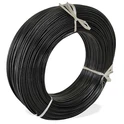
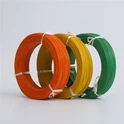
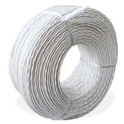
I often receive inquiries from customers, some asking about specifications, some asking about prices, but recently there is an interesting question: "How can we peel off this ultra-thin, high flexibility UL20711 multi-core copper wire so that the core wire inside is not damaged? "
Indeed, although UL20711 wire is useful, its original design intention is to be "thin and light". If the insulation layer is stripped too roughly, it can easily become "wire cutting". Today we will talk about practical tips for stripping UL20711 multi-core copper wire.
Understanding UL20711 Multi Core Copper Wire
Before we dive into the insulation stripping process, let's take a moment to understand what UL20711 multi core copper wire is. UL20711 is a specific standard set by Underwriters Laboratories (UL) for multi core copper wires used in low - voltage applications. These wires typically consist of multiple copper conductors bundled together, each insulated with a protective layer. The insulation serves several important functions, including preventing electrical shorts, protecting the conductors from environmental factors, and ensuring the safety of the electrical system.
The multi - core design of UL20711 wires makes them suitable for a wide range of applications, such as in consumer electronics, automotive wiring, and small appliances. The flexibility and durability of these wires are also significant advantages, allowing them to be easily routed and installed in tight spaces.


To do a good job, one must first sharpen their tools: choose the right tools to prevent them from tipping over
Stripping UL20711 precision multi-core wire, it is recommended to prepare these "sharp goods" in your toolbox:
Precision manual wire stripping pliers
(recommended index: ⭐⭐⭐⭐⭐)
This is the most commonly used and reliable choice. But please note that it is not the kind of bulk goods in supermarkets, but a precision model with precise AWG markings.
- Why choose it : The wire diameter of UL20711 is usually small, and the blade of the precision wire stripping pliers is calibrated by laser, which can accurately clamp between the insulation layer and the copper core, achieving "only stripping without harming the body".
- Key points for purchase : The blade should be sharp, and after closing, check for any gaps. A good pliers feel should have moderate damping and not shake.
Automatic wire stripping pliers
(recommended index: ⭐⭐⭐⭐)
If you have dozens or hundreds of connectors to deal with, manual pliers may make your mouth sore, and automatic wire stripping pliers come in handy.
- Its advantage : This type of pliers completes wire stripping through a two-step linkage of "one clip, one pull", with extremely high efficiency.
- Avoiding pitfalls guide : Be sure to choose the type with a pressure adjustment knob. Because the insulation layer of UL20711 is relatively soft, if the pressure is too high, the gripping teeth of the automatic pliers may deform the insulation layer or clip off the fine copper wires inside.
Rotary wire stripper
(recommended index: ⭐⭐⭐)
For some multi-core wires with thicker outer sheaths, this tool rotates the wire once through an internal small blade.
- Applicable scenario : When you need to peel off a longer outer sheath and do not want to damage multiple thin core wires inside, the rotation cutting point positioning is very accurate.
Heat Shrinking/Stripping Instrument (Essential for Advanced Masters)
In some extremely precise or military grade application scenarios, we will use "hot stripping".
- Principle analysis : It uses high temperature to instantly melt a circle of insulation layer, and then gently pull it.
- Advantages : minimal physical contact, 100% guarantee not to scratch copper wire. Although the equipment is a bit expensive, it is the ultimate solution for projects that pursue "zero defects".
Essential assistance: LED headlights
Don't underestimate this! The core wire of UL20711 is often not much thicker than a human hair.
- Usage : After peeling, check whether the copper wire has broken strands or scratches under the magnifying light. Sometimes it looks good to the naked eye, but when zoomed in, it is actually damaged, which can affect the subsequent conductivity performance.
Detailed explanation of insulation layer peeling steps: from "novice" to "experienced"
Do you want the stripped wire ends to be neat and the copper wire to be free from damage? Following these four steps is definitely correct:
Step 1: Precise calibration (confirm wire diameter and length)
- Find the correct hole position : First, carefully read the AWG markings on the UL20711 cable (such as 26AWG or 28AWG). Find the corresponding hole on the wire stripping pliers.
- Reserved length : Determine the length of copper core you need to expose. Suggestion: If you need wiring terminals, the stripping length is usually between 3mm-5mm; If it is manual welding, you can leave it a little longer.
- The old driver's advice : Before the official start, take a small piece of waste wire and test strip it to confirm whether the depth of the cutting edge is just right.
Step 2: Vertical alignment (posture determines success rate)
- Keep vertical : Place the wire horizontally into the V-shaped slot of the wire stripper. Attention! The wire must be kept 90 degrees perpendicular to the blade.
- Tight positioning : if your wire stripper has its own positioning slider, remember to put the top of the wire to the slider position, so as to ensure that the length of each strip is the same, which is good news for obsessive-compulsive disorder.
Step 3: Lightly press and rotate (key "ring cutting" action)
- Force control : Slowly close the handle. When you feel that the blade has already cut into the insulation layer but has not yet touched a hard object (copper core), stop!
- Turn it around : Maintain pressure, pinch the wire and gently turn it half or one turn.
- Why do we need to switch? The insulation layer of UL20711 is very tough, and rotating it can ensure that the insulation materials around are evenly cut, avoiding the situation of "rootedness and thread connection" when pulling.
tep 4: Smooth Slide Out (Art of Closing)
- Pull out smoothly and quickly along the axis of the wire, keeping the wire stripping pliers closed and applying force to the arm.
- Inspection result : First, check the fracture surface to see if it is smooth and if there are any burrs. Secondly, check the copper core: whether the small copper wires have been cut or scratched.Check the insulation three times: whether the remaining insulation layer is deformed or whitened under pressure.
Tips for Effective Stripping (Hidden Experience)
Many beginners are prone to tearing the wires or peeling off messy copper wires. Remember to avoid these pitfalls:
- Refuse to forcefully pull : If you feel unable to pull, it means that the cutting edge is not fully penetrated or the hole position is too small. Do not forcefully pull, otherwise it will strain the copper wire.
- Pay attention to temperature : If the insulation layer becomes brittle in a particularly cold environment, you can warm it up with your palm before peeling.
- Keep the blade sharp : Blunt blades cannot be peeled clean and can also squeeze the insulation layer, causing uneven cuts.
Application of UL20711 multi-core copper wire: Where does it emit light and heat?
Due to its space saving design, UL20711 is most commonly found inside devices where every inch of land is valuable.
① Intelligent robots and automated arms
- Application point : Joint rotation.
- Why use it : Robots may need to rotate hundreds of times per minute. The multi-core twisted structure of UL20711 makes it very resistant to bending, unlike ordinary hard wires that break after a few bends. It is a 'somersault cloud' for robots to move flexibly.
② Ultra thin consumer electronics (mobile phones, laptops, tablets)
- Application points : Internal motherboard connection, screen ribbon cable.
- Why use it : Nowadays, electronic products pursue the thinner the better. The insulation layer of UL20711 is extremely thin and can pass through narrow gaps. The reason why the ultrabook in your hand can be made so slim is also due to its contribution.
③ Medical precision instruments
- Application points : Endoscopes, portable ultrasound devices.
- Why use it : Medical devices require extremely high stability in signal transmission. UL20711's multi-core copper wire can provide very stable signals, and the material usually meets environmental standards, making it more reassuring to use in medical environments.
④ Automotive Interior Sensors and Control Systems
- Application points : reverse camera, airbag sensor, instrument panel wiring.
- Why use it : The interior environment of a car is complex, exposed to direct sunlight in summer and extremely cold in winter. UL20711 has good temperature resistance and can maintain signal transmission without dropping the chain even in such a "hot water" environment.
⑤ Smart home wiring
- Application points : Intelligent curtain motor, induction light strip, security camera.
- Why use it : Concealed installation requires wires to be as thin and easy to bend as possible. UL20711 is both aesthetically pleasing and easy to construct, making it a favorite among decorators and smart home enthusiasts.
If you're looking for other types of multi - core copper wires, we also offer3 Core Flexible Wire,Multi core shielded cable, andSilicone Stranded Wire. These wires have different characteristics and are suitable for different applications.
Conclusion
Stripping the insulation of UL20711 multi core copper wire is a skill that can be mastered with practice and the right tools. By following the steps and tips outlined in this blog post, you can achieve clean and precise insulation stripping, ensuring the safety and reliability of your electrical connections.
If you're in need of high - quality UL20711 multi core copper wire or have any questions about our products, don't hesitate to reach out to us for a purchase negotiation. We're committed to providing the best products and services to meet your needs.
References
- Underwriters Laboratories (UL) Standards for Electrical Wires and Cables
- Electrical Wiring Handbook for Professionals and DIY Enthusiasts