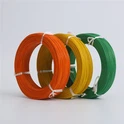
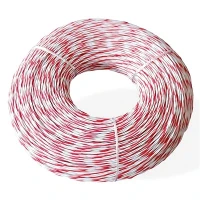
Hey there! As a supplier of single core copper wire, I often get asked about the dielectric strength of the insulation on our wires. So, let's dig into what exactly dielectric strength is and how it relates to our single core copper wire.
First off, what's dielectric strength? In simple terms, dielectric strength is the maximum electric field that an insulating material can withstand without breaking down and becoming conductive. When we're talking about the insulation on single core copper wire, it's the ability of that insulating layer to resist the flow of electricity through it under high - voltage conditions.
You see, the copper core of the wire is meant to carry the electrical current. The insulation around it serves two crucial purposes. One, it keeps the current within the copper core and prevents it from leaking out. Two, it protects people and other objects from getting in contact with the live wire, which could be extremely dangerous.
The dielectric strength of the insulation on single core copper wire is measured in volts per unit thickness (usually volts per mil or volts per millimeter). For example, if an insulation material has a dielectric strength of 500 volts per mil, it can withstand 500 volts of electrical pressure for every mil (0.001 inches) of its thickness.
Now, the actual dielectric strength of the insulation on our single core copper wire can vary depending on a few factors. The type of insulating material is a big one. We use different materials based on the requirements of the application. For instance, PVC (polyvinyl chloride) is a commonly used insulation material. It has a decent dielectric strength and is relatively inexpensive. Another option is Teflon, which has a much higher dielectric strength but comes at a higher cost.


The thickness of the insulation also plays a huge role. Thicker insulation generally means higher dielectric strength. But we have to balance that with other factors like cost, flexibility, and the overall size of the wire. If you're using the wire in a tight space, you might not be able to afford a very thick insulation.
The quality of the manufacturing process is also important. Any defects in the insulation, like tiny cracks or impurities, can significantly reduce the dielectric strength. That's why we have strict quality control measures in place to ensure that our single core copper wires meet the highest standards.
Let's talk about some of the applications where the dielectric strength of the insulation really matters. In high - voltage applications, such as in power transmission lines, the insulation needs to have a very high dielectric strength. A breakdown in the insulation can lead to power outages, equipment damage, and even pose a safety risk. That's where our high voltage flexible cable comes in handy. It's designed to handle high voltages with its high - quality insulation.
For more general - purpose electrical wiring, like in homes and offices, the dielectric strength requirements are lower but still important. You don't want the insulation to break down and cause a short circuit or an electrical shock. Our UL10584 single core wire is a great choice for these types of applications. It offers a good balance of dielectric strength, cost, and performance.
And if you're looking for something more basic, our unsheathed copper wire is also available. It might not have the same level of insulation as some of our other products, but it's still suitable for certain low - voltage and less demanding applications.
So, how do we test the dielectric strength of our single core copper wires? We use specialized equipment to apply a gradually increasing voltage to the wire while monitoring for any signs of breakdown. If the insulation can withstand the specified voltage without breaking down, it passes the test. We do this for every batch of wires we produce to ensure consistent quality.
As a supplier, I understand that different customers have different needs when it comes to dielectric strength. Some might need a wire with extremely high dielectric strength for a high - end application, while others might be looking for a more cost - effective solution with a lower dielectric strength requirement. That's why we offer a wide range of single core copper wires to meet those diverse needs.
If you're in the market for single core copper wire and want to know more about the dielectric strength of our products or how they can fit your specific application, don't hesitate to reach out. We're here to help you make the right choice. Whether you're an electrician working on a small project or an engineer designing a large - scale electrical system, we have the expertise and the products to meet your requirements.
In conclusion, the dielectric strength of the insulation on single core copper wire is a critical factor that determines its performance and safety in electrical applications. By understanding the factors that affect it and choosing the right wire for your needs, you can ensure a reliable and safe electrical system. So, if you have any questions or are ready to start a purchase, just get in touch. Let's work together to find the perfect single core copper wire for you.
References
- Electrical Insulation Handbook: A Guide to Selection, Application, and Testing.
- Standards and Guidelines for Electrical Wiring and Insulation Materials.