Automotive sensors play a critical role in monitoring temperature, pressure, speed, vibration, and other operating parameters in modern vehicles. As automotive systems become more compact and technologically advanced, the wiring that connects these sensors must deliver reliable electrical performance under demanding conditions. Selecting the right high temperature insulated wire is therefore an important purchasing decision for automotive component manufacturers, OEMs, and engineering teams seeking long-term reliability, stable signal transmission, and consistent product quality.
Automotive sensors require high temperature resistant insulated wire
Automotive sensors are installed in a wide range of locations, from engine compartments and exhaust monitoring systems to transmission assemblies, battery systems, and electronic control units. Each application presents different thermal, electrical, and mechanical challenges.
For example, sensors located near engines or exhaust components may experience elevated ambient temperatures and repeated thermal cycling. Transmission sensors may be exposed to lubricants and vibration, while sensors used in electric vehicles may need to operate reliably within compact electrical assemblies.
Ordinary wire insulation may not provide sufficient thermal stability or environmental resistance for every application. If insulation deteriorates, cracks, or loses its dielectric properties, the resulting electrical faults can affect sensor accuracy, system reliability, and maintenance costs.
When evaluating the wiring of automotive sensors, consideration should be given to the maximum continuous operating temperature, short-term temperature peaks, voltage requirements, chemical exposure, vibration resistance, and available installation space. These factors help determine the appropriate wire structure, rather than relying solely on temperature ratings.
Insulation material for High Temperature insulated Wire
Insulation material selection directly influences wire performance, service life, and total ownership cost. Different materials offer different combinations of thermal stability, flexibility, chemical resistance, and dimensional characteristics.
PTFE Wire is widely considered for demanding electrical applications because polytetrafluoroethylene offers excellent thermal stability, strong resistance to many chemicals, and favorable electrical insulation properties.
For automotive sensor assemblies exposed to elevated temperatures or aggressive operating environments, PTFE insulation can help maintain electrical performance over extended service periods. Its chemical resistance can also be beneficial where contact with oils, fuels, or other automotive fluids is a concern, although compatibility should be verified against the specific fluid and exposure conditions.
However, PTFE wire is not automatically the best choice for every sensor application. Buyers should assess conductor construction, insulation thickness, flexibility, termination requirements, and the actual temperature profile before making a final selection.
Fluorinated ethylene propylene (FEP) offers good electrical insulation, chemical resistance, and processing characteristics. It may be suitable for applications where the required thermal performance and mechanical properties align with the design specifications.
Ethylene tetrafluoroethylene (ETFE) provides a useful combination of mechanical strength, abrasion resistance, and electrical performance. It can be considered for wiring assemblies where resistance to handling and installation stresses is important.
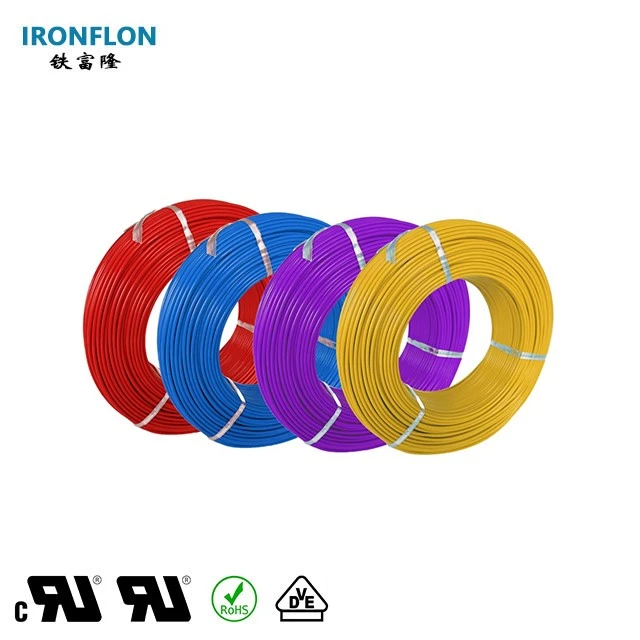

Before procurement, the procurement team should prepare a clear technical specification. This helps manufacturers recommend suitable structures and reduce the risk of ordering wires that are not suitable for the expected components:
- Operating temperature: Define both continuous exposure and any temporary temperature peaks. Confirm that the complete wire construction meets the application's thermal requirements.
- Conductor material and size: Evaluate conductivity, current requirements, signal characteristics, and compatibility with the selected terminals.
- Wire dimensions: Confirm finished outer diameter, insulation thickness, and dimensional tolerances, especially for compact sensor assemblies.
- Mechanical performance: Assess flexibility, bend radius, abrasion resistance, vibration exposure, and the stresses expected during installation.
- Environmental compatibility: Identify potential exposure to oil, fuel, coolant, cleaning agents, moisture, and other relevant substances.
- Compliance and traceability: Define the required automotive, customer-specific, and regulatory standards, together with inspection records and material documentation.


Choosing the appropriate wire is an important step in building a reliable automotive sensor system. Zhejiang IRONFLON has over 22 years of engineering and technical experience, focusing on the research and manufacturing of PTFE, FEP, and ETFE insulated wire and cable, and possessing professional production capabilities.
We have a modern production base that independently produces the entire process from conductor drawing, insulation extrusion to finished product testing. We are also equipped with imported production equipment and a complete set of precision testing instruments, such as wire thickness detection, resistance detection, flame retardant detection, etc. Accumulated 22 patented technologies, multiple qualification certifications (UL, CUL, VDE, RoHS, ISO9001, SGS), 3 software copyrights, and product quality reaching international advanced level.
Whether you are developing new automotive sensor components or looking to optimize existing cable solutions, our team is willing to communicate with you in depth about technical requirements and assist you in selecting suitable products.