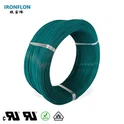
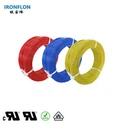
In wire procurement, many customers are conflicted about how to choose between nickel plated wire and tin plated wire? Although they have all undergone coating treatment on the copper core, the actual use is quite poor. Today we will explain these two types of wires, from essence to usage, in one go to help you avoid selection errors.
First understand: What is the essential difference between nickel plated and tin plated wire?
Whether it is nickel plated wire or tin plated wire, the core is a combination of "copper core+coating". The function of the coating is like putting a "protective clothing" on the copper core, but the material and ability of this clothing are different.
Nickel plated copper wire, in simple terms, refers to uniformly coating a layer of nickel on the surface of pure copper or copper alloy conductors. Nickel, as a metal, is inherently "tough", so the biggest feature of this coating is its toughness, wear resistance, and ability to withstand high temperatures and corrosion. For example, in some connectors that require frequent plugging and unplugging or in high-temperature environments, its stability is outstanding. Moreover, although nickel's conductivity is not as good as copper, the coating can reduce losses during high-frequency signal transmission, which is important in precision electronic devices.
Tin plated copper wire is coated with a tin layer on the outside of the copper core. Tin has a more "gentle" personality, with a melting point much lower than nickel, and its biggest advantage is its good welding performance. The pins of electronic components and PCB pads that we usually see are mostly treated with tin plating, because the tin layer can quickly wet the solder and prevent virtual soldering. In addition, the tin layer can also prevent copper core oxidation, but the protective effect will be weaker than that of the nickel layer when exposed to humid or high temperature environments for a long time.
In summary, both provide protection for the copper core, but nickel plated copper wire follows a "tough and durable" route, while tin plated copper wire emphasizes a "welding friendly" style.


Core difference: 3 dimensions to distinguish who is more suitable for you
Choosing wires should not only focus on the surface, but also start from the actual usage scenario. By comparing the three most critical dimensions, you can quickly determine which one better meets your needs:
1. Environmental resistance: Nickel plating on insulated wires can withstand "extreme tests" more effectively
If your product is to be used in high temperature, high humidity, or corrosive environments, such as aviation equipment, industrial heating equipment, or marine scenes, nickel plated insulated wires will be more reliable. The nickel layer can remain stable at high temperatures of around 200 ℃ and will not melt or produce "tin whiskers" like the tin layer - thin metal wires that can easily cause short circuit risks. In the high salt spray environment of the seaside, the corrosion resistance of the nickel layer is much stronger than that of the tin layer, which can extend the service life of the wire.
Tin plated insulated electrical wire is more suitable for ordinary environments with room temperature and dryness, such as internal wiring of household electronic products and small appliances. If exposed to high temperatures or humid environments for a long time, the tin layer may oxidize and discolor, affecting its conductivity.
2. Welding and processing: Tin plating of insulated wires is a "worry free player"
Friends who do electronic assembly must understand that welding efficiency and quality are crucial. The tin layer of tinned insulated electrical wire has a low melting point and is particularly compatible with solder. It can quickly form a strong solder joint during welding, with a low rework rate. For many small batch or manual welding scenarios, such as DIY electronic devices and small component connections, tin plated insulated wires are preferred.
The welding of nickel plated electrical wires is relatively "picky", requiring higher welding temperatures and more specialized solder materials, and is generally suitable for automated welding production lines. However, its advantage is that the solder joints have good long-term stability and are less likely to fail in high-voltage and high current scenarios.
3. High frequency performance: Nickel plated insulated wire is more suitable for precision transmission
Nickel plated wire perform better in scenarios involving radio frequency (RF) or high-frequency signal transmission, such as communication equipment and radar systems. The skin effect of nickel layer can reduce signal loss and make transmission more stable. Tin plated electrical wires have slightly greater signal attenuation in high-frequency scenarios, making them more suitable for ordinary signal transmission in mid to low frequencies.


Matching roles: How should different industries be selected?
Simply discussing theory is not enough, it is more intuitive to combine it with specific industry scenarios. Let's talk about several common areas:
1. Electronic manufacturing industry: Prioritize tin plating
Consumer electronic products such as mobile phones, computers, and printers mostly use tin plated cables for internal wiring. On the one hand, welding is convenient and can improve the efficiency of the production line; On the other hand, these products have a stable operating environment and do not require extreme temperature and corrosion resistance. For example, jumper wires on PCB boards, component pin connection wires, and tin plated cables are mainstream choices.
2. Aerospace and automotive industries: Nickel plating is more reliable
The high-temperature advantages of nickel plated cables are reflected in the high temperature environments surrounding aircraft engine compartments and car engines. In addition, high-frequency scenarios such as car mounted radar and aviation communication equipment also require nickel plated cables to ensure signal transmission quality. In addition, the marine environment of ships and the corrosion resistance of nickel plated cables can reduce maintenance costs.
3. Industrial and home appliance industries: flexible selection based on the scenery
In industrial scenarios, the wiring of high-temperature heating equipment and chemical reaction vessels should be nickel plated; And for ordinary control cabinets and sensor connection wires, tin plating is sufficient. In the field of home appliances, the internal wiring of high-temperature components such as microwave ovens and ovens is plated with nickel, while ordinary wiring for refrigerators and washing machines is plated with tin, which is more cost-effective.


Procurement Avoiding Pitfalls: Don't Ignore These 3 Details
After selecting the right type, there are a few small details that can help you avoid pitfalls when purchasing, whether it's buying nickel plated cables or tin plated cables
1. The thicker the coating, the better
Many people think that the thicker the coating, the better the protective effect, but it is actually unnecessary. A too thick coating can increase costs and may also affect the flexibility of the wire. Generally, the coating thickness of nickel plated cables is sufficient at 1-3 μ m, while that of tin plated cables is sufficient at 2-5 μ m. The specific thickness can be adjusted by the manufacturer according to the requirements of the usage environment.
2. Identify industry standards
Nickel plated cables from legitimate manufacturers will comply with international standards such as ASTM B355, and tin plated cables also have corresponding industry specifications. When purchasing, the manufacturer can be requested to provide a testing report, focusing on the test data of coating adhesion, conductivity, and corrosion resistance, to avoid purchasing inferior products with coatings that are prone to peeling off.
3. Balancing costs
Under the same specifications, the cost of nickel plated cables is higher than that of tin plated cables. If your product does not have extreme environmental requirements, there is no need to choose more expensive nickel plated cables for "durability"; But if it is a critical component or long-term equipment, choosing nickel plated cables can reduce maintenance costs in the later stage and is actually more cost-effective.
In conclusion, nickel plated wire are a versatile tool for extreme environments, suitable for high temperature, corrosion, and high-frequency scenarios; Tin plated wire are "economical and practical", suitable for ordinary environments and scenarios with frequent welding. Next time you make a purchase, compare it to the scene and choose it correctly! If you are unsure about specific usage scenarios, you can also leave a message and chat with us.