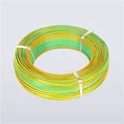
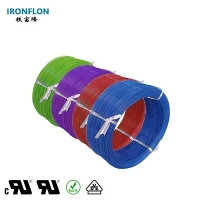
"How should I choose between Silver Plated Wire and Tinned Wire, both of which are coated wires? " Many customers have this question, in fact, there is no absolute "good or bad" distinction between these two types of wires, just like wearing different shoes in different scenarios, the key depends on your usage needs. Some people think that silver plating is necessarily better if it is expensive, but blindly follow the trend and find that there is excess performance after purchasing; Some people try to choose tin plating at a cheaper price, but often encounter problems in high temperature environments. Today we will talk about these two types of wires to help you avoid selection errors.
First understand the core difference: coating determines' temperament '
To choose the right wires, you need to first understand their core differences - the answer is the surface coating material. Although both focus on copper substrates, the "personalities" of silver and tin are completely different, directly determining the performance and applicable scenarios of wires.
Silver plated wire is a layer of pure silver plated on the surface of a copper core. Silver, as one of the most conductive metals in nature, endows wires with a natural "high-performance gene". This plating process is relatively delicate, requiring the surface of the copper core to be treated cleanly first, and then the silver layer to be evenly adhered through electroplating and other methods to ensure that every inch can exert its conductive advantage. Tinned wire, on the other hand, wraps a layer of tin around the copper core. Although tin's conductivity is not as good as silver, its advantages lie in strong stability, controllable cost, and practical craftsmanship. Its presence can be seen in many industrial scenarios.
Simply put, silver plated copper wire is like a "high-end player" in wires, focusing on a performance explosion; Tin plated copper wire is a representative of practicality, pursuing cost-effectiveness and scene adaptability. By clarifying this positioning, the selection process is already halfway through.


Silver plated wire: the 'performance ceiling' for high temperature scenarios
If you purchase wires for high-frequency signal transmission, high-temperature operations, or high-end equipment, then silver plated copper wire is likely to be your favorite. Its advantages are not built on data piles, but are demonstrated through practical applications.
The most prominent advantage is its strong electrical conductivity. Silver has even better conductivity than copper, especially when transmitting high-frequency signals, which can greatly reduce signal loss and interference. For example, the internal jumpers of 5G base stations, the connecting wires of radar systems, and the lines in satellite communication equipment almost all rely on silver plated electrical wires. Think about it, satellites transmit signals in space, and even a slight loss can affect the reception effect. Silver plated electrical wire can minimize this loss.
It also has high temperature resistance and corrosion resistance. Silver has a high melting point and can work in an environment of 180 ℃ for a long time without any problem. For scenarios such as sensor leads in industrial ovens and connection lines for new energy vehicle batteries, which are often in a high-temperature state, silver plated electrical wires can be stably held. In humid or salt spray environments, such as outdoor facilities in marine engineering, the silver layer can also act as a "protective shield" to isolate water vapor and corrosive substances, extending the service life of wires.
However, silver plated electrical wire also has a "small drawback": the cost is relatively high, about 3-5 times that of bare copper wire, making it a bit "overused" for ordinary scenarios. In addition, in environments with high sulfur content such as chemical workshops, the silver layer is prone to blackening and producing silver sulfide. Although it does not affect the core performance, it can affect the appearance and long-term stability. This should be noted when purchasing.


Tinned wire: the "king of cost-effectiveness" in industrial and consumer electronics
If your procurement needs are industrial assembly lines, household appliances, or ordinary electronic equipment, then tin plated copper wire is definitely the first choice for cost-effectiveness. It doesn't have the "eye-catching" performance of silver plated copper wire, but it performs reliably enough in demand scenarios.
Oxidation resistance is the "specialty" of tin plated wires. Copper cores exposed to air for a long time are prone to rusting and oxidation, leading to increased resistance and even poor contact. The tin layer is like a "corrosion-resistant coating" for copper wires, which can firmly lock the copper core and isolate oxygen and water vapor. In a damp industrial workshop, tin plated wires are used to connect sensors and PLCs, which can extend the service life by 3-5 times compared to bare copper wires; It is used for temporary wiring of outdoor security monitoring, and there is no need to worry about oxidation problems during the rainy season.
Good welding performance is even more of its' bonus point '. In consumer electronics production, such as wiring for mobile phone motherboards and pin connections for small components, tin plated wires can seamlessly blend with solder without the need for additional flux, greatly reducing the probability of virtual soldering and false soldering, and improving production efficiency. Many overseas customers purchase tinned wires for assembling household appliances because of their convenient soldering feature, which can save a lot of production time.
Of course, tin plated wires also have limitations. Its conductivity is slightly inferior to silver plating, and the loss during high-frequency signal transmission is more obvious. It is not suitable for use in communication base stations and other scenarios that require extremely high signal requirements. In addition, the melting point of tin is not high, and it is easy to soften and peel off when it exceeds 150 ℃. For high-temperature areas such as industrial kilns and car engine compartments, do not choose it, otherwise it is prone to safety hazards.


3-step selection: practical skills to avoid wasting money
After reading the previous introduction, some friends may feel a bit confused. Don't worry, remember these three steps. No matter which scenario you are purchasing wires for, you can choose the right one without stepping on pitfalls.
The first step is to clarify the usage environment. This is the most crucial step: if it is high-frequency signal transmission (such as communication equipment), high-temperature operations (such as heating equipment), or harsh corrosive environments (such as marine engineering), choose silver plated electrical wire directly; If it is a damp industrial workshop, internal wiring of household appliances, or electronic assembly scenarios that require frequent soldering, tin plated electrical wire is sufficient. For example, for customers who make solar energy equipment, tin plating is sufficient for ordinary outdoor wiring, while silver plating is required for high-frequency signal lines inside the equipment.
Step two, calculate the budget account. When the procurement volume is large, the cost difference will be very significant. If your product is a mid to low end consumer electronics or temporary engineering project, there is no need to pay for the premium of silver plating. Tin plated electrical wire has a higher cost-effectiveness; But if it is high-end medical equipment, aviation electronics and other products with strict performance requirements, do not save money on silver plated electrical wires. Failure to meet performance standards will actually increase maintenance costs in the later stage.
Step three, confirm the process requirements. If the purchased wires require welding, tin plated electrical wires should be prioritized to improve production efficiency; If it is crimping or fixed connection, and the scene is dry, even bare copper wire can be considered, but if the environment is humid, tin plating is still more secure. There is a European customer who makes automotive wiring harnesses. The ordinary wiring outside the engine compartment is tinned, while the high-temperature areas near the engine are silver plated. This not only meets performance requirements but also controls costs.
Finally, to summarize: Silver plated wire are a "performance responsibility" that focuses on high-end and special scenarios; Tinned wire is "practical and responsible", focusing on the cost-effectiveness needs of industrial and consumer electronics. Before your next purchase, please refer to this guide to clarify your needs, so you no longer have to worry about whether to choose silver or tin. If you are unsure about specific usage scenarios, please feel free to contact us at any time( Luna@Ironflon.Com )Let's work together to clarify the most suitable solution.