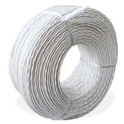
Hey there! I'm a supplier of UL20711 multi core copper wire. Over the years, I've gotten tons of questions from customers about how to boost the performance of this type of wire. So, I thought I'd share some insights based on my experience in the industry.
Let's first understand: What is UL20711 Multi Core Copper Wire?
To improve its performance, the first step is definitely to get to know it, understand its "temperament" and "abilities", otherwise the subsequent operations will be just random. Many people only know that it is a multi core copper wire that complies with UL standards, but they do not know its core characteristics, which inevitably leads to pitfalls when using it.
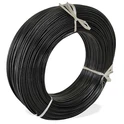
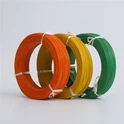
Simply put, UL20711 multi core copper wire is a multi core copper cable that has been certified by UL in the United States (equivalent to the "quality pass" in wires). The core is "multi-core" - there are several thin copper wire conductors inside, wrapped in insulation layer, and some even have shielding layer. It is different from ordinary single core copper wire. Its multi core design allows for more stable transmission and can adapt to various complex scenarios, such as wiring for household appliances, industrial equipment, and small instruments.
Its advantages are obvious : good conductivity, strong flexibility, not easy to break, and the insulation layer has good temperature and moisture resistance, which meets safety standards. But it also has a "delicate temperament", such as being afraid of excessive bending, high temperature exposure, and poor contact, all of which can affect its performance. Therefore, subsequent operations are actually based on its "temperament", avoiding pitfalls and protecting it.
Here's a reminder, don't confuse UL20711 with other models of multi-core copper wire. Different models have different certification standards, applicable scenarios, and performance focuses. Recognizing the UL20711 logo is the foundation for all subsequent operations.
Choosing the Right Gauge: Don't be too greedy for size or too small, a good fit is the best
In the process of selecting specifications, many people tend to make two mistakes: either they think "the larger the specification, the better", thinking that thicker copper wires are more durable and conductive, and blindly choosing thicker wires; Either seeking affordability and convenience, choosing specifications smaller than actual demand, resulting in long-term overloading of copper wires. In fact, both of these methods will seriously affect the performance of UL20711 multi core copper wire and may even shorten its service life.
The core principle of selecting specifications is based on the actual usage scenario, as long as it fits well. Don't memorize complex calculation formulas, just remember two key points.
1. Look at the load current : Simply put, it means how much current is needed to drive the device with this copper wire. For example, driving small household appliances (such as routers and small printers) with low current, selecting finer specifications is sufficient; If driving small industrial equipment with high current, it is necessary to choose thicker ones to avoid long-term overloading of copper wires, which can lead to heating, insulation layer aging, and even safety hazards.
2. Look at the wiring distance : the longer the wiring distance, the greater the loss during current transmission. At this time, it is necessary to choose a thicker specification to reduce the loss; If it is short distance wiring (such as internal wiring of equipment, only a few tens of centimeters), choosing regular specifications is sufficient, there is no need to waste.
Additionally, it is important to pay attention to the number of cores in the copper wire. UL20711 multi core copper wire has different core numbers, such as 2-core, 3-core, and 4-core. The more cores, the more stable the signal or current it can transmit, making it suitable for scenarios that require synchronous operation of multiple lines. For example, if the device needs to transmit both power and signals simultaneously, choose one with a larger number of cores; If it's just about transmitting electricity, as long as there are enough cores, there's no need to buy more.
To sum up, when choosing specifications, there is no need to compare them. You should choose according to your own load size and wiring distance, without being greedy for large or small. Choosing the right one can fully utilize the performance of copper wire and avoid unnecessary waste.
Correct installation: get the details right, double performance (avoid these pitfalls!)
During the installation process, pay attention to these three points, which are the easiest pitfalls for beginners to step on:
1. Strip the wire neither too long nor too short : When using wire stripping pliers to strip the insulation layer, control the length well, usually exposing 1-2 centimeters of copper wire is enough. Stripping too long exposes too much copper wire, which is prone to oxidation and poor contact; If the stripping is too short and the copper wire does not fully contact the terminal block, it will cause an increase in contact resistance, severe heating, and also affect the conductivity.
2. Avoid excessive bending : Although UL20711 multi core copper wire has good flexibility, it should not be excessively bent, especially in turning areas, and should not be bent hard or rigidly. Excessive bending can damage the copper wire inside, causing it to break and decrease its conductivity. In severe cases, it can even directly break the core and become unusable. It is recommended to maintain a certain curvature when bending and follow the natural direction of the copper wire.
3. The connection must be firm : whether it is connecting device terminals or connecting copper wires, it must be firmly connected. Use wire pliers to press down or tighten with screws to avoid looseness or loose connections. Virtual connection can cause an increase in contact resistance, which not only consumes power but also generates heat. Over time, it can accelerate the aging of the insulation layer and even cause short circuits.
Another small detail : when wiring, try to organize it neatly, without winding or squeezing, especially when multiple copper wires are parallel, maintain a certain distance to avoid mutual interference and reduce heat generation. If you need to pass through walls or floors, remember to use protective sleeves to prevent the walls from scratching the insulation layer.
After installation, perform a simple check : gently pull the copper wire with your hand to see if the connection is secure; Observe whether the wiring is neat and whether there are any excessive bends, confirm that there are no problems, and then turn on the power for use.
Shielding and grounding: do this step well to fully enhance anti-interference ability
Many people overlook shielding and grounding, thinking that 'as long as copper wire can conduct electricity, it's fine', but this is not the case. Many UL20711 multi core copper wires come with shielding layers. Proper shielding and grounding can not only protect the copper wire itself, but also improve its anti-interference ability, making signal transmission more stable, especially in environments with electromagnetic interference (such as near motors and frequency converters). This step is crucial.
Let's talk about the shielding layer first. It is like a "protective cover" for copper wire, which can block external electromagnetic interference and prevent signal leakage of the copper wire itself, avoiding affecting surrounding equipment. When installing normally, pay attention to protecting the shielding layer and do not scratch or cut it, otherwise the shielding effect will be lost.
Speaking of grounding, the core function of grounding is to discharge the interference current induced on the shielding layer, avoiding interference from entering the copper wire and affecting its performance. Grounding doesn't need to be too complicated, but there are two key points to note:
1. Reliable grounding : The grounding terminal must be firmly connected to prevent looseness, otherwise the grounding effect will be greatly reduced. It is recommended to use dedicated grounding terminals, tighten them when wiring, and regularly check to prevent looseness and corrosion.
2. Distinguish between single point grounding and multi-point grounding : If it is high-frequency signal transmission (such as equipment signal lines), it is recommended to use single point grounding to reduce the circulating current on the shielding layer and achieve better anti-interference effect; If it is a low-frequency signal or power transmission, multiple grounding points can be used to reduce impedance and ensure grounding stability.
Here's a reminder: If your UL20711 multi core copper wire does not come with a built-in shielding layer and is used in an environment with strong electromagnetic interference, you can add an additional shielding sleeve and ground it properly to achieve anti-interference effect. Don't think that shielding and grounding are "unnecessary steps", doing them well can avoid many problems such as unstable signals and equipment misoperation.
Maintenance and inspection: more Dim sum for a longer and more stable use
The performance of UL20711 multi core copper wire relies not only on proper selection and installation, but also on daily maintenance and inspection. Just like how we usually maintain household appliances, regular inspections and timely handling of small problems are necessary to prevent small faults from becoming big problems and maintain good performance of copper wires in the long run.
Maintenance and inspection do not need to be too frequent, just according to the usage scenario, such as checking once every six months for household use; Used on industrial equipment, check once every three months, focusing on these aspects, simple and easy to operate:
1. Appearance inspection : Check whether the insulation layer of the copper wire is damaged, aged, cracked, and whether it is contaminated by oil or water stains; Is the shielding layer damaged or detached; Is the connection point loose or blackened (blackening is caused by poor contact and heating). If the insulation layer is found to be damaged, repair it with insulation tape in a timely manner. If it is serious, replace it directly and do not compromise on use.
2. Temperature check : After powering on and using for a period of time, touch the copper wire and connection point with your hand to feel the temperature. Under normal circumstances, it should be slightly warm and not hot to the touch; If you feel hot on your hands, it may be due to selecting a smaller size, poor contact, or overloading. It is important to promptly investigate the cause and avoid potential safety hazards.
3. Grounding inspection : Regularly check the grounding terminals for looseness, rust, and damage to the grounding circuit to ensure reliable grounding. If the grounding is loose, tighten it in time; If the rust is severe, replace the grounding terminal and circuit.
4. Cleaning the surroundings : Clean the debris and dust around the copper wire, especially in industrial scenarios, to avoid oil stains and corrosive liquids splashing onto the copper wire and damaging the insulation layer; In household scenarios, do not press copper wires under heavy objects to avoid damage from compression.
Another tip : If the copper wire is not used for a long time, such as when the equipment is idle, it is recommended to disconnect the power supply, tidy up the copper wire, avoid being in a powered state for a long time, and also avoid being squeezed or bent, which can extend its service life. In addition, the service life of copper wire is generally 15-30 years, depending on the usage environment. If the copper wire is severely aged and its performance is significantly reduced, it should be replaced in a timely manner. Do not force it to be used.
Consider the environment: Only when the environment is suitable can the performance not "break down"
The performance of UL20711 multi core copper wires is easily affected by the environment. Different environments have different requirements for copper wires. If the environmental factors are ignored, even if the specifications are selected correctly and the installation is perfect, the performance of the copper wires will be greatly reduced, and they are also prone to damage. Therefore, when using, it is necessary to adjust in combination with the environment to make the copper wires adapt to the environment, so as to achieve the best performance.
The common environmental impacts mainly include the following types. Just handle them properly and it will be fine.
1. Temperature environment : High temperature environments (such as near boilers, ovens, or outdoor exposure) can accelerate the aging of the insulation layer, causing copper wire oxidation and a decrease in conductivity; Low temperature environments (such as outdoor severe cold weather) can make the insulation layer brittle and prone to cracking, and the flexibility of copper wire will also decrease, making it easy to break. Response method: Choose UL20711 model with better temperature resistance in high temperature environments, or install insulation sleeves; Try to avoid exposing copper wires outdoors in low-temperature environments, or take insulation measures to avoid excessive bending.
2. Moisture environment : For example, bathrooms, kitchens, underground garages, or during rainy days outdoors, a humid environment can cause the insulation layer of the copper wire to get damp, which may lead to leakage, short circuits, and accelerate the oxidation of the copper wires. Solution: Choose waterproof UL20711 multi core copper wire. Ensure proper sealing at the connection points to prevent water from entering; Regularly inspect the insulation layer and handle any dampness promptly upon detection.
3. Corrosive environment : For instance, in industrial workshops, there are corrosive gases and liquids that can corrode the insulation layer and copper wires of the copper cables, causing damage to the copper cables. Solution: Choose the UL20711 model that is resistant to corrosion, or install anti-corrosion sleeves to prevent the copper cables from directly contacting corrosive substances; regularly clean the corrosion substances on the surface of the copper cables and replace the damaged parts in time.
4. Outdoor Environment : The outdoor copper wires will be exposed to wind, sunlight, rain, and may also be subject to external impacts and scratches, making them prone to damage. Solution: Choose UL20711 multi core copper wires specifically designed for outdoor use. Ensure proper fixation and protection to prevent the copper wires from being exposed in open areas, thereby reducing the possibility of external damage.
In simple terms, it means "tailoring measures to local conditions". Based on factors such as temperature, humidity and corrosiveness of the usage environment, take appropriate protective measures to ensure that the copper wire operates in a comfortable environment, and its performance will naturally not fail.
Choosing the Right Insulation Material
The insulation material of the UL20711 multi core copper wire is also important for performance. Different insulation materials have different properties, such as temperature resistance, flexibility, and chemical resistance.
For high - temperature applications, you'll want to choose an insulation material with high - temperature resistance. Some common insulation materials for this type of wire include PVC (polyvinyl chloride), TPE (thermoplastic elastomer), and fluoropolymers. Each material has its own advantages, so choose the one that best suits your application.


Compatibility with Other Components
When using UL20711 multi core copper wire, make sure it's compatible with other components in your system. For example, if you're using it to connect to a device with a specific input impedance, make sure the wire's impedance is compatible.
Also, consider the voltage and current ratings of all the components in the circuit. The wire should be able to handle the maximum voltage and current that the circuit may encounter.
Use the correct cable type: Don't use the wrong one, otherwise even the best performance will be in vain
The last and most fundamental point is to use the correct cable type, do not confuse UL20711 multi-core copper wire with other types of cables, and do not use inferior cables that do not meet the standards. Otherwise, even if all the previous steps are done well, the performance will be greatly reduced and there may be safety hazards.
1. To recognize UL20711 certification, only multi-core copper wires with UL20711 markings can ensure their performance and safety. Do not buy inferior products without certification. The copper wire purity of such products is insufficient, the insulation layer material is poor, the conductivity is poor, and they are also prone to aging and leakage.
2. Choose the correct type of UL20711 multi core copper wire based on the usage scenario. UL20711 has different types of subdivisions, such as waterproof, high temperature resistant, and corrosion-resistant. Different types have different performance focuses, such as:
- Indoor dry environment (such as household wiring, office equipment wiring) : Choosing conventional UL20711 multi core copper wire is enough, with high cost-effectiveness and performance that can meet the needs;
- Damp and outdoor environment : Choose waterproof UL20711 multi-core copper wire, with good insulation layer waterproof performance, which can avoid moisture and leakage;
- High temperature environment (such as industrial high-temperature equipment wiring) : Choose UL20711 multi core copper wire that can withstand high temperatures and avoid insulation layer aging and melting.
3. Do not use UL20711 multi core copper wire as other types of cables, such as high-voltage cables and power cables. Its rated voltage and load-bearing capacity are limited, and forced use can cause copper wire overheating, damage, and even safety accidents.
Conclusion and Call to Action
Well, that's my take on how to improve the performance of UL20711 multi core copper wire. I hope these tips are helpful to you. If you're in the market for high - quality UL20711 multi core copper wire, I'd love to have a chat with you. Whether you need help choosing the right wire for your project or have any other questions, don't hesitate to reach out for a procurement discussion.
References
- Electrical Wiring Handbook, [Author's Name if available, Edition]
- Underwriters Laboratories Standards for UL20711
- Technical documentation from major wire manufacturers