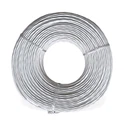
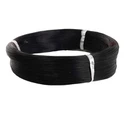
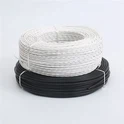
Chromatic dispersion is a crucial concept in the field of optical and electrical communication, and it also plays a significant role in understanding the performance of UL1671 tin plated ETFE insulated wire. As a trusted supplier of UL1671 tin plated ETFE insulated wire, I am excited to delve into the details of chromatic dispersion and its implications for our product.
Understanding Chromatic Dispersion
Chromatic dispersion refers to the phenomenon where different wavelengths of light or electrical signals travel at different speeds through a medium. In the context of UL1671 tin plated ETFE insulated wire, this can have a profound impact on the transmission of data and signals. When a signal is sent through the wire, it typically consists of a range of wavelengths. Due to chromatic dispersion, these wavelengths will spread out over time as they travel along the wire.


This spreading can lead to a number of issues. For example, in high - speed data transmission, it can cause inter - symbol interference (ISI). ISI occurs when the spread of one symbol (a unit of data) overlaps with the next symbol, making it difficult for the receiver to accurately distinguish between them. As a result, the quality of the received signal can degrade, leading to errors in data transmission.
Chromatic Dispersion in UL1671 Tin Plated ETFE Insulated Wire
The construction of UL1671 tin plated ETFE insulated wire can influence its chromatic dispersion characteristics. The tin plating on the wire serves several purposes, including improving corrosion resistance and conductivity. However, it can also interact with the electrical signals in a way that affects chromatic dispersion.
ETFE (Ethylene Tetrafluoroethylene) is used as the insulation material. ETFE has excellent electrical properties, such as low dielectric constant and loss tangent. These properties help to minimize the impact of chromatic dispersion to some extent. The low dielectric constant means that the speed of signal propagation is relatively stable across different wavelengths, reducing the amount of spreading.
The combination of the tin plating and the ETFE insulation creates a unique environment for signal transmission. The tin plating can act as a conductor, guiding the electrical signals, while the ETFE insulation helps to maintain the integrity of the signals by reducing interference and dispersion.
Measuring Chromatic Dispersion
There are several methods for measuring chromatic dispersion in UL1671 tin plated ETFE insulated wire. One common approach is the phase - shift method. In this method, a sinusoidal signal is sent through the wire at different frequencies (corresponding to different wavelengths). By measuring the phase shift of the signal at the output compared to the input, the chromatic dispersion can be calculated.
Another method is the pulse - delay method. A short pulse is sent through the wire, and the time it takes for the pulse to reach the output is measured. By comparing the delay times for different wavelengths, the chromatic dispersion can be determined.
Impact on Different Applications
Telecommunications
In telecommunications applications, such as high - speed data transmission over long distances, chromatic dispersion in UL1671 tin plated ETFE insulated wire can be a major concern. For example, in fiber - optic - like data centers where copper wires are still used for short - to - medium - range connections, chromatic dispersion can limit the data rate and the maximum distance of transmission. To overcome this, techniques such as dispersion compensation may be required.
Industrial Automation
In industrial automation, UL1671 tin plated ETFE insulated wire is often used to connect sensors, actuators, and control systems. Chromatic dispersion can affect the accuracy and reliability of the signals transmitted between these components. For instance, in a robotic arm control system, any signal degradation due to chromatic dispersion can lead to inaccurate movements and reduced productivity.
Comparison with Other ETFE Insulated Wires
When comparing UL1671 tin plated ETFE insulated wire with other ETFE insulated wires such as UL10109 ETFE Insulated Wire and UL10316 ETFE Insulated Wire, the chromatic dispersion characteristics may vary. The differences in construction, such as the thickness of the tin plating and the properties of the insulation, can lead to different levels of chromatic dispersion.
UL1671 tin plated ETFE insulated wire is designed to offer a balance between conductivity, corrosion resistance, and signal integrity. While other wires may have different focuses, such as higher flexibility or lower cost, our UL1671 wire is optimized for applications where reliable signal transmission and long - term durability are crucial.
Managing Chromatic Dispersion in UL1671 Tin Plated ETFE Insulated Wire
As a supplier, we take several steps to manage chromatic dispersion in our UL1671 tin plated ETFE insulated wire. First, we carefully select the materials for the tin plating and the ETFE insulation. The quality and properties of these materials are closely monitored to ensure consistent performance.
We also conduct extensive testing during the manufacturing process. By measuring the chromatic dispersion of each batch of wire, we can identify any potential issues and make adjustments as needed. This quality control process helps to ensure that our customers receive wire with reliable and predictable chromatic dispersion characteristics.
Conclusion
Chromatic dispersion is an important factor to consider when using UL1671 tin plated ETFE insulated wire. Understanding its effects and how to manage it is crucial for ensuring high - quality signal transmission in various applications. Our company is committed to providing high - performance UL1671 tin plated ETFE insulated wire that meets the strictest industry standards.
If you are interested in learning more about our UL1671 Tin Plated ETFE Insulated Wire or have specific requirements for your project, we invite you to contact us for procurement and further discussions. Our team of experts is ready to assist you in finding the best solution for your needs.
References
- "Optical Fiber Communication Technology" by Gerd Keiser
- "Electrical Engineering Handbook" edited by Richard C. Dorf