Hey there! As a supplier of single core copper wire, I often get asked about the frequency response of these wires. So, I thought I'd take a few minutes to break it down for you.
First off, let's talk about what frequency response actually means. In simple terms, frequency response refers to how well a wire can transmit signals at different frequencies. Think of it like a radio - you want to be able to pick up all the different stations clearly, right? Well, the same goes for wires. We want them to be able to carry signals across a wide range of frequencies without losing too much of the signal strength or introducing a bunch of noise.
Now, single core copper wire is pretty awesome when it comes to frequency response. Copper is a great conductor of electricity, which means it can carry electrical signals with relatively low resistance. Resistance is like a roadblock for the signal - the higher the resistance, the more energy the signal loses as it travels through the wire. Since copper has low resistance, it allows signals to travel through it more easily, which is super important for good frequency response.
But it's not just about the material. The design and construction of the single core copper wire also play a big role. For example, the diameter of the wire matters. A thicker wire generally has lower resistance and can carry more current, which can be beneficial for transmitting signals at higher frequencies. On the other hand, a thinner wire might be more flexible and easier to work with in some applications, but it might not perform as well at very high frequencies.
Another factor is the insulation around the wire. Good insulation helps to prevent interference from external sources, like electromagnetic fields. If there's too much interference, it can distort the signal and mess up the frequency response. So, we make sure our single core copper wires are well - insulated to keep the signals clean.
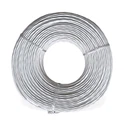
Let's take a look at some of the products we offer. We have the UL10584 Single Core Copper Wire, which is designed for a wide range of applications. It has been tested to provide excellent frequency response within its specified frequency range. Whether you're using it for telecommunications, power transmission, or some other electrical project, this wire can handle the job.
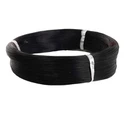
Then there's the UL10358 Single Core Copper Wire. This one is a bit more specialized. It's been optimized for applications that require a more precise frequency response, like in some high - end audio systems. The way it's constructed helps to minimize signal loss and distortion, so you can get the best possible sound quality.
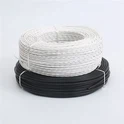
And don't forget about the UL10308 Single Core Copper Wire. This wire is great for applications where you need to transmit signals over longer distances. It has a design that helps to maintain a good frequency response even when the signal has to travel a fair way.


Now, you might be wondering how we test the frequency response of our single core copper wires. Well, we use some pretty advanced equipment. We send a range of test signals through the wire at different frequencies and measure the output. We look at things like the amplitude (how strong the signal is) and the phase (how the signal is shifted in time) to make sure everything is within the acceptable range.
In real - world applications, the frequency response of single core copper wire can make a huge difference. For example, in a telecommunications network, if the wire has a poor frequency response, you might experience dropped calls, slow data transfer speeds, or poor voice quality. In an audio system, it could mean a lack of clarity, muddled bass, or a loss of high - frequency details.
So, if you're in the market for single core copper wire, it's really important to consider the frequency response. And that's where we come in. We've been in the business for a long time, and we know how to make wires that offer great frequency response.
Whether you're a small - scale DIY enthusiast or a large - scale industrial customer, we've got the right single core copper wire for you. Our team is always here to answer your questions and help you choose the best product for your specific needs.
If you're interested in learning more about our single core copper wires or you're ready to place an order, don't hesitate to get in touch. We're looking forward to working with you and helping you get the most out of your electrical projects.
References:
- Electrical Engineering Textbooks on Conductors and Signal Transmission
- Industry Standards and Specifications for Single Core Copper Wires