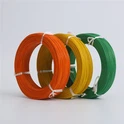
When dealing with the electrical industry, the performance parameters of cables and wires are of utmost significance. Among them, the tensile strength of UL10358 single core copper wire stands out as a crucial characteristic that requires in - depth understanding. As a supplier of UL10358 single core copper wire, I am well - placed to provide comprehensive insights into this topic.
Understanding UL10358 Single Core Copper Wire
The UL10358 single core copper wire is a specialized product that meets the safety and performance standards set by Underwriters Laboratories (UL). This type of wire is commonly used in various electrical applications, including household appliances, automotive systems, and electronic devices due to copper's excellent electrical conductivity.
Tensile Strength Defined
Tensile strength refers to the maximum stress that a material can withstand while being stretched or pulled before it breaks. In the context of UL10358 single core copper wire, it is a measure of how much force the wire can endure during installation, operation, or handling without failing.
Factors Affecting Tensile Strength
Copper Purity
The purity of copper used in the wire has a significant impact on its tensile strength. High - purity copper, such as oxygen - free copper, typically has better tensile strength compared to copper with impurities. This is because impurities can act as weak points in the crystal structure of the copper, making it more susceptible to breakage under stress.
Wire Gauge
The gauge of the wire, which is a measure of its diameter, also affects its tensile strength. Generally, thicker wires (lower gauge numbers) have higher tensile strengths than thinner wires (higher gauge numbers). This is because a larger cross - sectional area can withstand more force before reaching its breaking point.
Annealing Process
The annealing process, which involves heating the wire and then cooling it slowly, can change the microstructure of the copper and affect its mechanical properties, including tensile strength. Annealed copper is softer and more ductile, which can reduce its tensile strength compared to non - annealed (hard - drawn) copper. However, the increased ductility allows the wire to be bent and formed more easily without cracking.
Measuring Tensile Strength of UL10358 Single Core Copper Wire
The tensile strength of UL10358 single core copper wire is typically measured in pounds per square inch (psi) or megapascals (MPa). Industry standard testing methods, such as ASTM B193, are used to conduct tensile tests. In a typical tensile test, a sample of the wire is clamped at both ends and then pulled at a constant rate until it breaks. The force applied at the moment of breakage is recorded, and the tensile strength is calculated by dividing this force by the cross - sectional area of the wire.
Importance of Tensile Strength in Application
Installation
During installation, wires may be pulled through conduits, around corners, or over long distances. A wire with high tensile strength is less likely to break during these processes, ensuring a smooth and trouble - free installation. For example, in large - scale building construction where wires need to be routed through complex duct systems, the ability of the UL10358 single core copper wire to withstand pulling forces is essential.
Durability
In long - term use, the wire may be subjected to vibrations, mechanical stress, or occasional pulling. A wire with sufficient tensile strength can better resist these forces and maintain its integrity over time. This is especially important in automotive applications, where the wires are exposed to constant vibrations and movements.
Safety
A wire that breaks due to insufficient tensile strength can cause electrical shorts, power outages, or even pose a fire hazard. By ensuring that the UL10358 single core copper wire has adequate tensile strength, we can enhance the safety of electrical systems.
Comparison with Other Types of Copper Wires
When comparing the tensile strength of UL10358 single core copper wire with other types of copper wires, such as single core multi strand flexible copper cable and unsheathed copper wire, there are some notable differences.
Multi - strand flexible copper cables are designed to be more flexible, which often means they have a slightly lower tensile strength compared to single - core wires. However, their flexibility makes them suitable for applications where the wire needs to be bent or moved frequently.


Unsheathed copper wires, on the other hand, may have different tensile strengths depending on their construction and intended use. Some unsheathed wires are designed for high - strength applications and may have a higher tensile strength than UL10358 single core copper wire in certain cases.
Our UL10358 Single Core Copper Wire Offerings
As a supplier of UL10358 single core copper wire, we take pride in offering products that meet or exceed industry standards for tensile strength. We use high - purity copper in our manufacturing process and carefully control the wire gauge and annealing process to ensure optimal mechanical properties.
Our quality control team conducts regular tensile tests on our products to guarantee that each batch of UL10358 single core copper wire meets the required specifications. This commitment to quality has earned us a reputation for reliability among our customers in various industries.
Related Products for High - Stress Applications
In addition to UL10358 single core copper wire, we also offer high voltage flexible cable, which is suitable for applications that require both high tensile strength and the ability to handle high - voltage currents. These cables are designed to withstand the rigors of demanding electrical environments while maintaining their structural integrity.
Contact Us for More Information
If you are in need of UL10358 single core copper wire or have any questions about its tensile strength and performance, we encourage you to get in touch with us. Our team of experts is ready to provide you with detailed product information, technical support, and competitive pricing. Whether you are a large - scale manufacturer or a small - business owner, we can meet your specific requirements.
References
- ASTM B193 Standard Test Method for Resistivity of Electrical Conductor Materials
- UL Standards for Safety for Wire and Cable
- Industry Publications on Copper Wire Properties and Applications