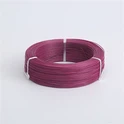
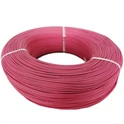
As a supplier of UL1558 tin plated ETFE insulated wire, I often receive inquiries from customers about the product's performance in various environments. One question that comes up frequently is whether UL1558 tin plated ETFE insulated wire is resistant to fungus. In this blog post, I will delve into this topic based on scientific understanding and our practical experience in the industry.
Understanding UL1558 Tin Plated ETFE Insulated Wire
Before we discuss fungus resistance, let's first understand what UL1558 tin plated ETFE insulated wire is. UL1558 is a standard set by Underwriters Laboratories (UL), which ensures that the wire meets specific safety and performance requirements. The wire is made up of a tinned conductor and an ETFE (Ethylene Tetrafluoroethylene) insulation layer.
The tin plating on the conductor offers several benefits. Tin is a corrosion - resistant metal, which helps protect the underlying conductor from oxidation and other forms of corrosion. This is especially important in harsh environments where the wire may be exposed to moisture or chemicals.


ETFE insulation is known for its excellent electrical properties, including high dielectric strength, low dielectric constant, and good resistance to high and low temperatures. It also has good mechanical properties, such as flexibility and abrasion resistance. The combination of tinned conductor and ETFE insulation makes UL1558 wire suitable for a wide range of applications, including aerospace, automotive, and industrial electronics.
You can learn more about ETFE insulation wire and tinned stranded wire on our website.
Fungus and Its Impact on Wires
Fungus is a type of microorganism that can grow in environments with the right conditions, such as high humidity, moderate temperature, and the presence of organic matter. When fungus grows on wires, it can cause several problems. Firstly, it can physically damage the insulation layer. The mycelium of the fungus can penetrate the insulation, leading to a breakdown of the electrical insulation properties. This can result in short - circuits, electrical leakage, and ultimately, equipment failure.
Secondly, the presence of fungus can also affect the mechanical properties of the wire. The growth of fungus can make the insulation brittle and reduce its flexibility, making it more prone to cracking and damage during installation or use.
Fungus Resistance of UL1558 Tin Plated ETFE Insulated Wire
ETFE insulation has inherent properties that contribute to its fungus resistance. ETFE is a fluoropolymer, which means it has a very low surface energy. This low surface energy makes it difficult for fungi to adhere to the surface of the insulation. Additionally, ETFE is chemically inert, which means it does not provide a suitable substrate for fungal growth. Fungi typically require organic matter as a food source, and ETFE does not contain the necessary nutrients for their survival and growth.
The tin plating on the conductor also plays a role in preventing fungal growth. Tin has antibacterial and antifungal properties. It can inhibit the growth of fungi by releasing tin ions, which are toxic to microorganisms. This helps to protect the wire from fungal infestation, especially in areas where the insulation may be damaged and the conductor is exposed.
However, it's important to note that while UL1558 tin plated ETFE insulated wire has good fungus resistance, it is not completely immune to fungal growth. In extremely harsh environments with very high humidity and a large amount of organic matter, there is still a possibility of fungal growth. For example, if the wire is installed in a poorly ventilated area with a lot of dust and moisture, the conditions may be conducive to fungal growth.
Testing and Certification
To ensure the fungus resistance of UL1558 tin plated ETFE insulated wire, it undergoes a series of tests. These tests are designed to simulate real - world conditions and evaluate the wire's performance in the presence of fungi.
One common test is the ASTM G21 standard test method for determining the resistance of synthetic polymeric materials to fungi. In this test, samples of the wire are exposed to a specific type of fungus in a controlled environment for a certain period of time. After the exposure, the samples are examined for signs of fungal growth and any changes in their physical and electrical properties.
If the wire passes these tests, it can be certified as having a certain level of fungus resistance. This certification provides customers with confidence in the product's performance in environments where fungus may be a concern.
Applications and Considerations
UL1558 tin plated ETFE insulated wire is used in many applications where fungus resistance is important. In the aerospace industry, for example, wires are often exposed to a wide range of environmental conditions, including high humidity and temperature variations. The fungus resistance of the wire helps to ensure the reliability of the electrical systems in aircraft.
In the automotive industry, wires are used in various components, such as engine control units and sensors. These components are often located in areas where they may be exposed to moisture and dirt, making fungus resistance a crucial factor.
When using UL1558 tin plated ETFE insulated wire in applications where fungus resistance is required, it's important to consider the installation environment. The wire should be installed in a well - ventilated area to reduce humidity. Additionally, regular inspections should be carried out to check for any signs of fungal growth.
If you are interested in UL10086 Teflon wire, which also has excellent performance in various environments, you can find more information on our website.
Conclusion
In conclusion, UL1558 tin plated ETFE insulated wire has good fungus resistance due to the properties of its ETFE insulation and tin - plated conductor. The low surface energy and chemical inertness of ETFE make it difficult for fungi to adhere and grow, while the antifungal properties of tin help to protect the conductor. However, it's important to note that no wire is completely immune to fungal growth, and proper installation and maintenance are essential to ensure its long - term performance.
If you are in need of high - quality UL1558 tin plated ETFE insulated wire or have any questions about its fungus resistance or other properties, please feel free to contact us for a procurement discussion. We are committed to providing you with the best products and services to meet your needs.
References
- ASTM G21 - 15 Standard Test Method for Determining the Resistance of Synthetic Polymeric Materials to Fungi
- Underwriters Laboratories (UL) standards for electrical wires and cables