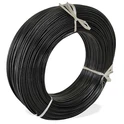
Hey there! As a supplier of UL1508 tin plated ETFE insulated wire, I often get asked about the cross - sectional area of this wire. So, I thought I'd sit down and write this blog to clear up all the questions you might have.
First off, let's talk a bit about what UL1508 tin plated ETFE insulated wire is. UL1508 is a standard set by Underwriters Laboratories, which is a well - known organization for product safety testing and certification. The tin plating on the wire provides good conductivity and corrosion resistance. ETFE (Ethylene Tetrafluoroethylene) is an excellent insulation material. It's got high heat resistance, chemical resistance, and it's also pretty tough.
Now, the cross - sectional area of a wire is super important. It determines a lot of things, like how much current the wire can carry. You see, a larger cross - sectional area means more space for electrons to flow through the wire. So, the wire can handle more current without getting too hot. On the flip side, a smaller cross - sectional area limits the amount of current the wire can carry safely.
The cross - sectional area of UL1508 tin plated ETFE insulated wire can vary. It usually comes in different American Wire Gauge (AWG) sizes. The AWG system is a standardized wire gauge system used predominantly in the United States. The smaller the AWG number, the larger the cross - sectional area of the wire. For example, a 10 AWG wire has a much larger cross - sectional area than a 20 AWG wire.
Let's break it down a bit more. For a 16 AWG UL1508 tin plated ETFE insulated wire, the cross - sectional area is approximately 1.309 square millimeters. This size of wire can typically handle currents up to around 13 - 15 amps, depending on the installation conditions like ambient temperature and whether the wire is bundled with other wires or not.
If you need a wire that can carry more current, you might consider a 12 AWG wire. The cross - sectional area of a 12 AWG UL1508 tin plated ETFE insulated wire is about 3.31 square millimeters. This wire can handle currents up to around 20 - 25 amps.
But why would you need a wire with a larger cross - sectional area? Well, there are plenty of reasons. If you're working on a high - power electrical project, like a large industrial machine or a high - end audio system, you'll need wires that can handle a lot of current. Using a wire with a too - small cross - sectional area in these situations can lead to overheating, which is not only a fire hazard but can also damage your equipment.
On the other hand, if you're working on a low - power project, like a small electronic device or a sensor circuit, a wire with a smaller cross - sectional area will do just fine. It'll save you space and money, as smaller wires are generally cheaper.
When you're choosing the right cross - sectional area for your UL1508 tin plated ETFE insulated wire, you also need to think about the voltage drop. Voltage drop occurs when the current flows through the wire, and the wire has some resistance. The larger the cross - sectional area, the lower the resistance of the wire, and thus the lower the voltage drop. This is crucial in applications where maintaining a stable voltage is important, like in precision electronic circuits.
Now, I'd like to mention some other related products we offer. If you're interested in different types of wires, check out our UL10125 Teflon wire. It's also a great option for high - performance applications. And if you need a high heat resistant wire, we've got that too. Our high temperature flexible cable is perfect for situations where you need flexibility along with high - temperature resistance.
In conclusion, choosing the right cross - sectional area of UL1508 tin plated ETFE insulated wire is a crucial decision. You need to consider factors like the current - carrying capacity, voltage drop, and the specific requirements of your project. Whether you're a professional electrician, an engineer, or a DIY enthusiast, we've got the right wire for you.
If you're interested in purchasing UL1508 tin plated ETFE insulated wire or have any questions about the cross - sectional area or other aspects of our products, don't hesitate to reach out. We're here to help you make the best choice for your project.


References:
- Electrical Wiring Handbook
- Underwriters Laboratories Standards for Electrical Wires and Cables